

How to Get Insurance to Cover Roof Replacement
 Craig YoungCEO9 min read
Getting insurance to cover a roof replacement requires showing the damage was caused by a covered event, documenting it promptly, and following the claims process with clear evidence and professional inspections. Sudden damage from hail, wind, fire, or falling debris, supported by photos and contractor reports, greatly improves your chances of approval.
This guide also covers which roof damage is covered or excluded, how to file a claim, payout types, roof age limits, common denials, tips for approval, appeal options, and the roles of contractors and adjusters.
When Does Insurance Cover Roof Replacement?
Homeowners insurance covers roof replacement when damage is sudden, accidental, and caused by a covered event, not from normal wear or neglect. Common situations include:
- Hail damage – Cracked or punctured shingles from storms are typically covered.
- Windstorms – Shingles or flashing lifted by strong winds are usually insured.
- Tornadoes & Hurricanes – Severe storm damage is generally covered, sometimes with a separate deductible.
- Fire & Lightning – Roof damage from fire or lightning is almost always covered.
- Falling trees or debris – Accidental impacts are typically reimbursed.
- Vandalism – Intentional damage may be covered with documentation or a police report.
- Snow or ice – Collapse or structural damage from heavy snow/ice is usually covered; gradual damage may not be.
- Sudden structural collapse – Covered if caused by a peril, but not from long-term deterioration.
Insurance pays for verifiable, sudden damage from covered events, while aging, neglect, or gradual wear usually isn’t covered, making prompt documentation essential.
Step-by-Step: How to Get Insurance to Pay for Roof Replacement
Getting your insurance to cover a roof replacement requires careful planning, documentation, and communication. By following a structured process, you increase the chances of having your claim approved and receiving full or partial reimbursement for the repair or replacement costs.
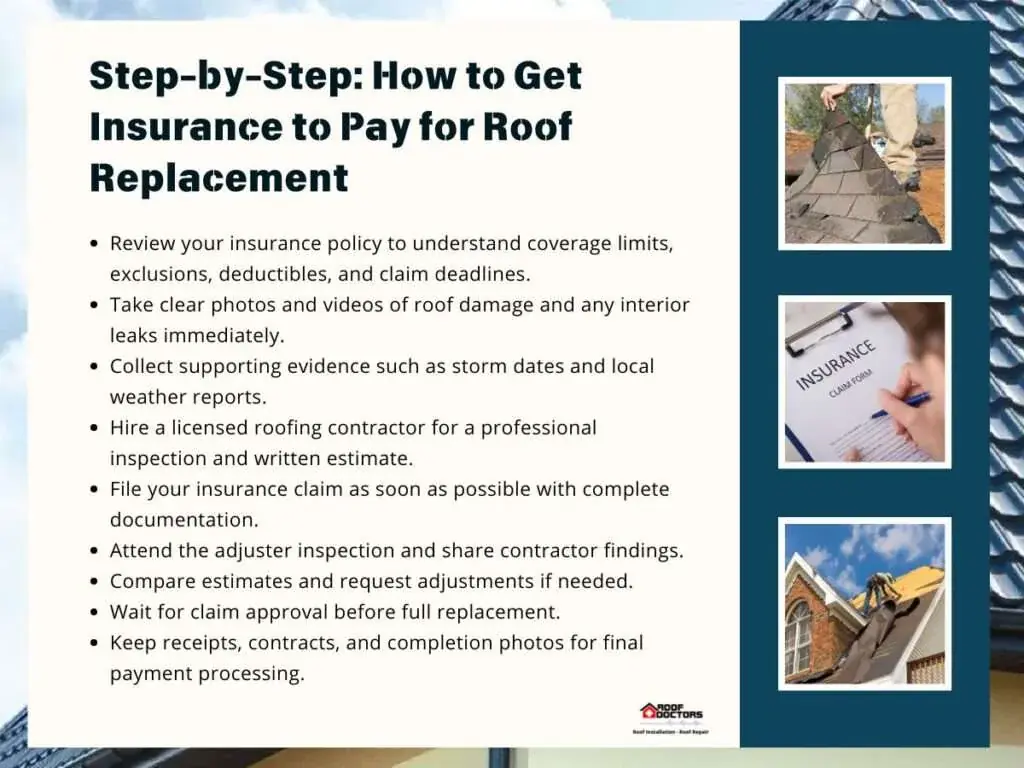
Step 1 — Review Your Insurance Policy
Before filing a claim, carefully read your homeowners insurance policy to understand coverage, exclusions, and deductibles. Note whether your policy provides Replacement Cost Value (RCV) or Actual Cash Value (ACV), as this affects how much you’ll be reimbursed. Knowing the policy details ensures you file correctly and set realistic expectations.
Step 2 — Document the Damage Immediately
After the damage occurs, take clear photos and videos of the roof, any interior leaks, and surrounding debris. Record the date, time, and cause if known, and save weather reports or storm records that support your claim. Thorough documentation strengthens your case and helps prevent disputes with the insurance adjuster.
Step 3 — Get a Professional Roof Inspection
Hire a licensed roofing contractor to inspect the damage and provide a detailed written report. The report should include photos, a damage assessment, and an estimate for repairs or replacement. Insurers rely on professional evaluations to validate the severity of damage and the necessary scope of work.
Step 4 — File Your Claim Quickly
Contact your insurance company as soon as possible to start the claims process, either online or through your agent. Provide all documentation, including photos, storm reports, and the contractor’s inspection report. Timely filing is crucial, as many policies have strict deadlines for submitting claims.
Step 5 — Meet the Insurance Adjuster
An adjuster will visit your property to assess the damage in person. Be present with your contractor if possible, provide your documentation, and answer questions clearly. This ensures all damage is noted and helps prevent underestimation of repair costs.
Step 6 — Review the Adjuster’s Estimate
Once the adjuster submits their report, compare it with your contractor’s estimate. If the insurance payout seems too low, you can request a supplement or second review. Understanding your estimate helps you avoid being underpaid for covered damage.
Step 7 — Start Work After Approval
Do not replace the roof before receiving approval unless it’s an emergency to prevent further damage. Keep all receipts, contracts, and photos of the completed work to submit for any remaining payment, particularly if your policy is RCV. Proper documentation ensures the final payout matches actual costs.
Following these steps—from reviewing your policy to completing the replacement—maximizes the likelihood that your insurance will cover your roof replacement. Careful documentation, timely filing, professional assessments, and active participation during the adjuster visit are key to securing a fair and successful claim.
Replacement Cost vs Actual Cash Value (Critical Difference)
When filing a roof replacement claim, it’s essential to know whether your policy pays Replacement Cost Value (RCV) or Actual Cash Value (ACV), as this determines how much the insurer will cover and what you may owe out of pocket. RCV covers the full replacement cost minus deductible, often reimbursing depreciation after repairs, while ACV only pays the depreciated value based on the roof’s age and condition.
| Feature | Replacement Cost Value (RCV) | Actual Cash Value (ACV) |
| Payout | Full cost to replace roof (minus deductible) | Current value after depreciation |
| Depreciation | Reimbursed after repairs | Permanently subtracted |
| Out-of-Pocket | Only deductible unless over policy limit | Often substantial for older roofs |
| Best For | Maximum coverage for sudden damage | Lower-premium policies |
RCV policies generally offer higher coverage and less out-of-pocket expense, while ACV can leave older roofs undercompensated, making it important to know your policy type before filing a claim.
How Roof Age Affects Insurance Approval
The age of your roof can significantly impact whether an insurance company approves a claim and how much they will pay. Older roofs are more likely to be depreciated or excluded from full replacement coverage, so understanding age limits and policy rules is essential.
- Asphalt shingles – Most insurers provide full coverage for asphalt shingle roofs up to 15–25 years old; beyond this, they may switch from RCV to ACV or reduce payout.
- Wood shake roofs – Typically covered fully up to about 20 years; older roofs may face depreciation or partial denial.
- Metal roofs – Often have longer coverage periods due to durability, with many policies allowing full replacement for 30+ years if damage is sudden.
- Tile and slate roofs – Usually have the longest coverage lifespan, sometimes exceeding 50 years, though older roofs may still face depreciation in ACV policies.
- Older roofs in general – Insurance companies may refuse new policies or limit RCV coverage for roofs past a certain age, requiring proof of maintenance and condition.
Roof age directly affects claim approval and payout, with older roofs often subject to depreciation or reduced coverage. Keeping records of installation, maintenance, and inspections can help ensure a smoother claim process, even for aging roofs.
Common Reasons Roof Claims Get Denied
Insurance claims for roof replacement are not automatically approved, and understanding why claims are denied can help homeowners avoid costly mistakes. Most denials occur when the damage is not sudden, well-documented, or falls outside the policy’s covered perils.
- Lack of maintenance – Claims are often denied if damage resulted from neglect or poor upkeep rather than a sudden event.
- Filing too late – Submitting a claim long after the damage occurs can violate policy deadlines and lead to denial.
- No proof of storm damage – Without photos, reports, or weather data linking damage to a covered event, insurers may reject the claim.
- Pre-existing damage – Roof issues that existed before the insured event are typically excluded from coverage.
- Improper installation – Damage caused by poor workmanship or installation defects is generally not covered.
- Cosmetic damage only – Some insurers do not cover minor aesthetic damage that doesn’t affect the roof’s functionality.
Most roof claim denials stem from a lack of proper documentation, delayed filing, or damage not caused by a covered event. Preventing denial requires timely action, thorough evidence, and clearly distinguishing sudden damage from long-term deterioration.
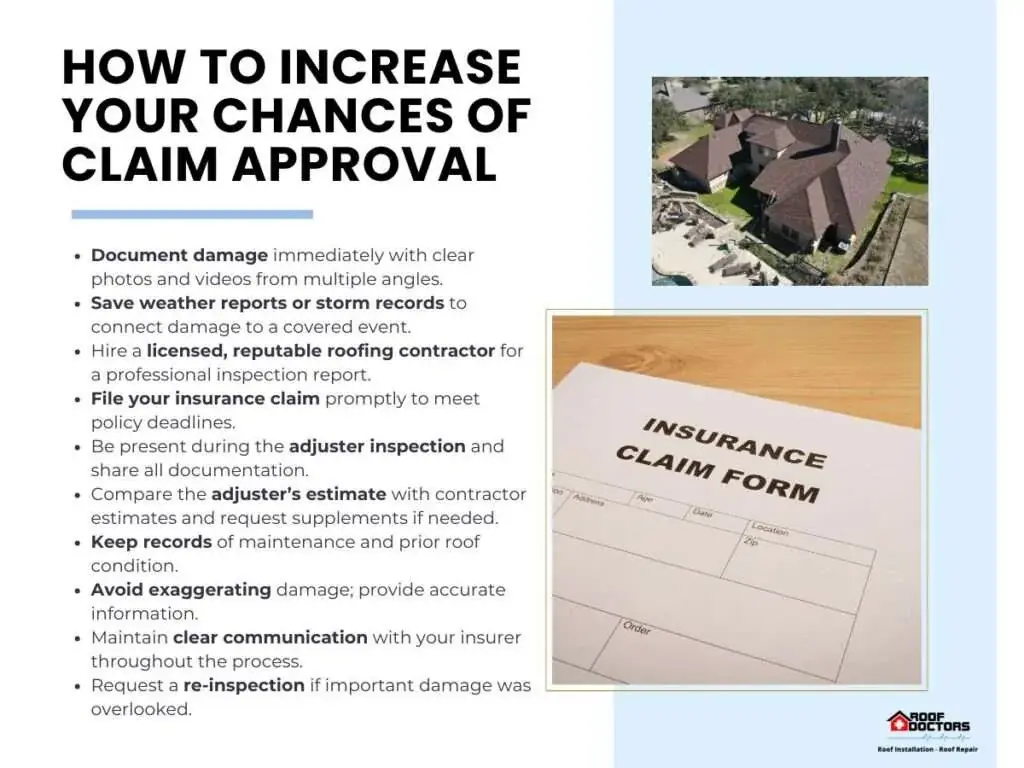
How to Increase Your Chances of Claim Approval
Getting insurance to cover a roof replacement depends on preparation, documentation, and clear communication. Taking proactive steps can help ensure your claim is approved and fairly compensated.
- Use a licensed contractor – Insurers trust assessments and estimates from reputable professionals.
- Get multiple opinions – A second inspection can reveal hidden damage and add supporting evidence.
- Document thoroughly – Photos, videos, and storm reports strengthen your claim.
- Report damage accurately – Avoid exaggeration to prevent denial or fraud allegations.
- Link damage to the storm – Clearly connect roof issues to a covered event.
- Request re-inspection if needed – A second review can increase your payout if damage was missed.
Success relies on timely action, professional assessments, and strong documentation to ensure your claim is fully supported and approved.
What If Your Roof Claim Is Denied?
A denied roof claim can be frustrating, but homeowners have several options to challenge the decision and pursue coverage. Acting quickly and knowing your options increases the chance of a successful appeal.
- Ask for written denial – Understand why your claim was denied and identify gaps in documentation.
- Submit more evidence – Provide extra photos, contractor reports, or storm data to strengthen your case.
- Request re-inspection – A second adjuster review can catch overlooked damage.
- Hire a public adjuster – They assess damage, document claims, and negotiate on your behalf.
- File an appeal – Present new evidence through the insurer’s formal appeals process.
- Contact state insurance regulator – If necessary, file a complaint for regulatory assistance.
A denial isn’t the end; with additional evidence, re-inspections, and appeals, homeowners can still secure approval and coverage for legitimate roof damage.
Should You Call Insurance or Contractor First?
When facing roof damage, it’s usually best to have a licensed contractor inspect the roof first before contacting your insurance company. A professional assessment provides detailed documentation, photos, and cost estimates that strengthen your claim and ensure all damage is accurately reported, which can prevent disputes or underpayment from the insurer.
Emergency Repairs Before Claim Approval
Roof damage can create immediate risks like leaks or structural issues. Insurance generally allows temporary emergency repairs to prevent further damage, but proper documentation is essential for reimbursement.
- Tarping the roof – Covers exposed areas to stop water intrusion; costs are usually reimbursed.
- Stopping leaks – Temporary fixes protect your home’s interior and are typically covered.
- Removing fallen trees or debris – Clearing hazards or debris is generally allowed.
Emergency repairs help prevent additional loss, but photos, receipts, and notes are crucial to ensure reimbursement while protecting your home.
Final Takeaway
Insurance can cover roof replacement when the damage is sudden, well-documented, and falls under a covered peril. Following a clear process reviewing your policy, recording the damage, hiring a licensed contractor, filing the claim promptly, and cooperating with the adjusterngreatly , increases your chances of approval and full reimbursement.
Understanding additional factors like roof age, policy type (RCV vs ACV), common denial reasons, and appeal options also helps you handle the process effectively. Being proactive, organized, and timely is essential for a successful claim and minimizing out-of-pocket expenses.
Craig Young is the CEO of Roof Doctors and brings a background in finance, construction, and real estate to the company. He holds undergraduate degrees in International Business and Accounting and a Master's Degree in Finance. Craig is a licensed roofing contractor in California (CSLB #896271), Nevada (License #0095416), Arizona, and Florida (DBPR #CCC1333287), a HAAG Certified Roofing Inspector, and a California Licensed Real Estate Broker. He leads an EPA Lead-Safe Certified Firm and is a GAF Certified Plus Residential Roofing Contractor. He works in Xactimate and Cotality, the estimating platforms used for property assessment and insurance claim documentation. His experience spans construction, real estate, ranching, logging, land development, project management, and business operations.
Related articles
How Much Is a Permit for Roof Replacement in California?
If you’re planning a roof replacement in California, one of the first questions homeowners ask is: how much is a permit for roof replacement? The short answer is that roof replacement permits in…

Should I Stay Home During Roof Replacement? What Homeowners Need to Know
No, you don’t have to stay home during a roof replacement and in many cases, it’s actually more comfortable to leave while the work is being done. A roof replacement is one of the most important…

Comparing Different Roof Underlayment Types
Roof underlayment is a crucial component of roofing systems, acting as a protective barrier between the roof deck and the shingles. It helps prevent moisture infiltration and enhances the roof’s…
Ready for a roof inspection?
Schedule a roof inspection and a roofing specialist will assess your roof, document its condition, and provide a clear written estimate. No advance deposit.