Roofing and Real Estate Value: What Buyers Look For
 Craig YoungCEO9 min read
A well-maintained roof is crucial for both protecting your home and enhancing its value. It not only safeguards the interior from the elements but also contributes significantly to energy efficiency and overall curb appeal.
This article delves into the importance of a well-maintained roof, exploring key factors buyers consider when evaluating a property and examining how roofing condition affects appraisals and home inspections. Additionally, it provides strategies for upgrading your roof to maximize return on investment (ROI). By understanding these aspects, homeowners can make informed decisions to improve their property’s market value and attractiveness.
The Importance of a Well-Maintained Roof
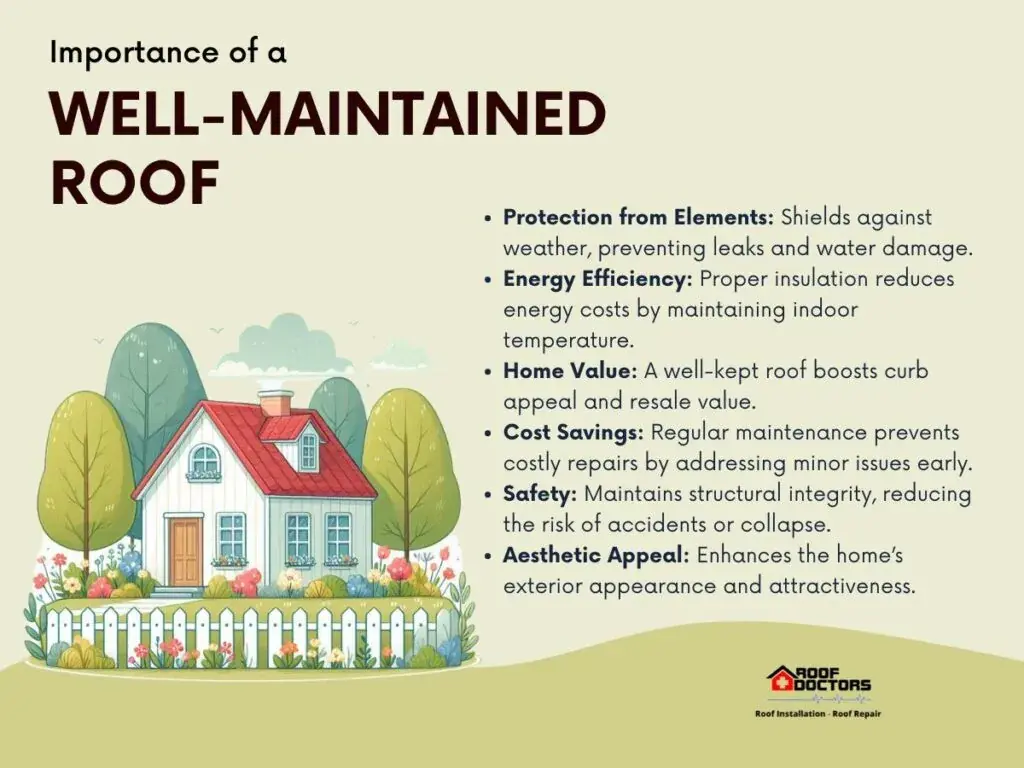
A well-maintained roof is crucial for safeguarding your home and ensuring its longevity. Here’s why keeping your roof in top condition is so important:
1. Protection from the Elements
The roof is your home’s primary defense against weather conditions such as rain, snow, wind, and sun. A well-maintained roof prevents leaks and water damage, protecting the interior of your home from structural damage, mold growth, and other issues caused by moisture infiltration.
2. Energy Efficiency
An intact and well-maintained roof contributes to your home’s energy efficiency. Proper insulation and ventilation prevent heat from escaping during winter and keep the house cooler in summer. This helps reduce energy bills by minimizing the need for excessive heating and cooling.
3. Preservation of Home Value
A well-maintained roof enhances your home’s curb appeal and overall value. When selling a home, a roof in good condition is a significant selling point, as buyers are less likely to face unexpected repair costs. A new or well-cared-for roof can increase the resale value and attract more potential buyers.
4. Avoidance of Costly Repairs
Regular maintenance helps identify and address minor issues before they become major problems. By fixing small repairs early, you can avoid more extensive and costly repairs or replacements in the future. Preventive maintenance extends the lifespan of your roof and protects your investment.
5. Increased Safety
A deteriorating roof can pose safety risks, such as structural instability or potential collapse. Regular inspections and maintenance ensure that your roof remains safe and secure, protecting your home and its occupants from potential hazards.
6. Enhanced Aesthetic Appeal
A well-maintained roof contributes to your home’s overall appearance. Clean and properly maintained roofing materials improve curb appeal and make a positive impression on visitors and potential buyers.
Maintaining your roof is essential for protecting your home from the elements, enhancing energy efficiency, preserving its value, avoiding costly repairs, ensuring safety, and improving aesthetic appeal. Regular inspections and timely maintenance can extend the life of your roof and safeguard your home, making it a worthwhile investment for any homeowner.
Key Factors Buyers Consider in a Roof
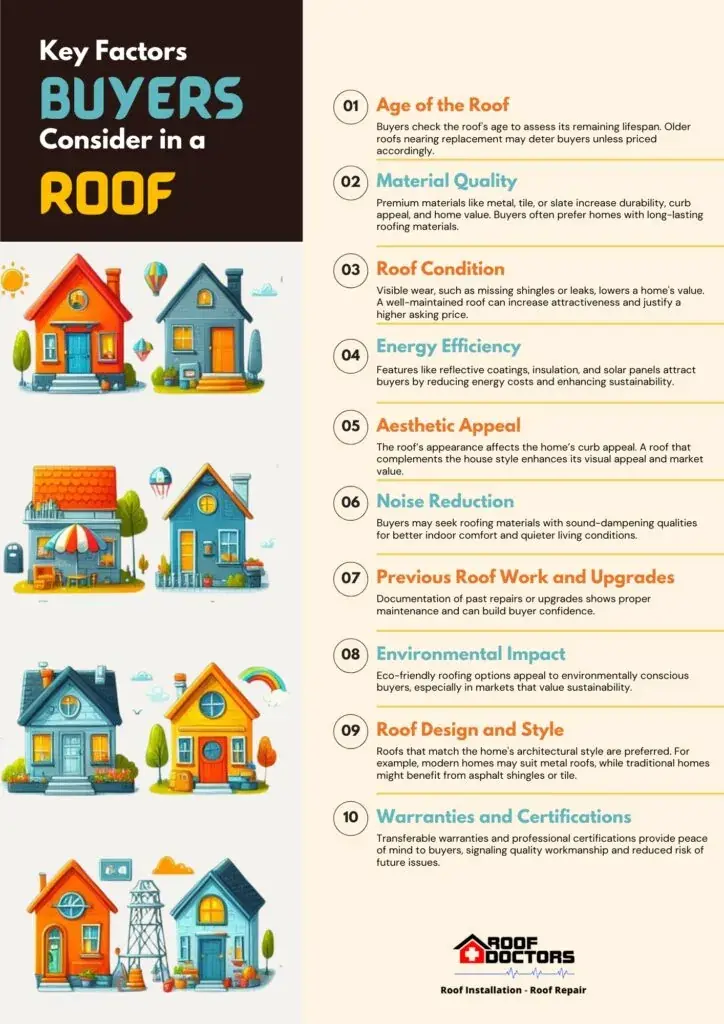
When evaluating a home, potential buyers pay close attention to the roof, as it plays a significant role in their purchasing decisions. Here are the key factors that buyers typically consider when assessing the condition and quality of a roof:
Age of the Roof
The age of the roof is one of the first questions buyers will ask. Most roofing materials have a finite lifespan, with asphalt shingles lasting 20-30 years, metal roofs up to 50 years, and tile or slate roofs even longer. A roof nearing the end of its expected life span can deter buyers unless the rest of the property is priced to reflect the cost of a replacement.
Material Quality
The type of roofing material can greatly influence both the aesthetic appeal and durability of a home. Premium materials like metal, tile, or slate not only last longer but also add to the property’s curb appeal and, by extension, its market value. Buyers are often willing to pay more for homes with high-quality, long-lasting roofing materials.
Roof Condition
The overall condition of the roof is paramount. Signs of wear and tear, such as missing shingles, sagging areas, or visible leaks, can quickly reduce a home’s value. Buyers typically expect a roof to be in good repair, and a well-maintained roof can be a strong selling point, making the home more attractive and justifying a higher asking price.
Energy Efficiency
With the growing emphasis on sustainability and energy efficiency, buyers are increasingly interested in roofs that contribute to lower energy costs. Features like reflective coatings, proper insulation, and even solar panels are becoming more desirable, as they can reduce heating and cooling expenses. Homes with energy-efficient roofs can command a premium as buyers recognize the long-term savings they offer.
Aesthetic Appeal
The roof’s appearance plays a significant role in a home’s curb appeal, which is critical in real estate. A roof that complements the style and color of the house can enhance the overall look of the property, making it more inviting to potential buyers. Conversely, an unattractive or mismatched roof can detract from the home’s visual appeal and overall value.
Noise Reduction
Some buyers consider the roof’s ability to reduce noise from rain, hail, or other external sources. Roofing materials with sound-dampening qualities can enhance indoor comfort and appeal to buyers who prioritize a quiet living environment.
Previous Roof Work and Upgrades
Documentation of previous roof work or upgrades can be valuable to buyers. Records of past repairs, replacements, or improvements demonstrate that the roof has been well-maintained and provide insight into its current condition. This transparency can build buyer confidence and facilitate a smoother transaction.
Environmental Impact
Some buyers are interested in the environmental impact of roofing materials. Eco-friendly options, such as recyclable materials or roofs with high reflectivity that reduce heat absorption, can be attractive to environmentally conscious buyers. Consideration of green roofing options may be important in certain markets.
Roof Design and Style
The design and style of the roof should complement the home’s architectural style. Buyers often prefer roofs that enhance the overall look of the house and match its design. For instance, a modern home may benefit from a sleek metal roof, while a traditional home might be better suited to classic asphalt shingles or tile.
Warranties and Certifications
Buyers often look for roofs that come with transferable warranties or have been installed by certified professionals. A warranty can provide peace of mind, assuring buyers that they won’t face immediate roofing issues after purchasing the home. Certification from a reputable roofing company also suggests quality workmanship, further increasing buyer confidence.
The roof is a critical factor in determining a home’s value and marketability. Buyers consider various aspects of the roof, including its age, material quality, condition, energy efficiency, aesthetic appeal, warranties, and maintenance history. A roof that meets buyers’ expectations in these areas can enhance the home’s appeal, potentially leading to a quicker sale and a higher selling price.
How Roofing Can Affect Appraisals and Home Inspections
Roofing plays a crucial role in home appraisals and inspections, and here’s how it impacts each:
Appraisals
- Condition and Age: The condition and age of the roof are significant factors in determining a home’s value. A newer or well-maintained roof can increase a property’s value, while an old or damaged roof may decrease it.
- Material Type: The type of roofing material can affect value. High-quality materials like metal or slate can add value, whereas cheaper materials might not.
- Curb Appeal: A roof that looks good from the street enhances the overall curb appeal of the home, which can positively impact the appraisal value.
Home Inspections
- Structural Integrity: Inspectors assess the roof for signs of wear and tear, such as missing shingles, leaks, or damaged flashing. Any issues found can be a red flag and may lead to costly repairs.
- Insulation and Ventilation: Proper insulation and ventilation in the attic area are also evaluated. Poor insulation or ventilation can lead to problems like mold or ice dams, which might be flagged during an inspection.
- Water Damage: Inspectors look for evidence of water damage inside the home that might be related to roof issues. Stains on ceilings or walls can indicate leaks or poor roofing conditions.
Overall, a well-maintained roof can enhance the value and appeal of your home, while roofing issues can lead to lower appraisals and potential complications during inspections.
Upgrading Your Roof for Maximum ROI
Upgrading your roof can significantly boost your home’s value and return on investment (ROI). To achieve the best results, consider these key strategies:
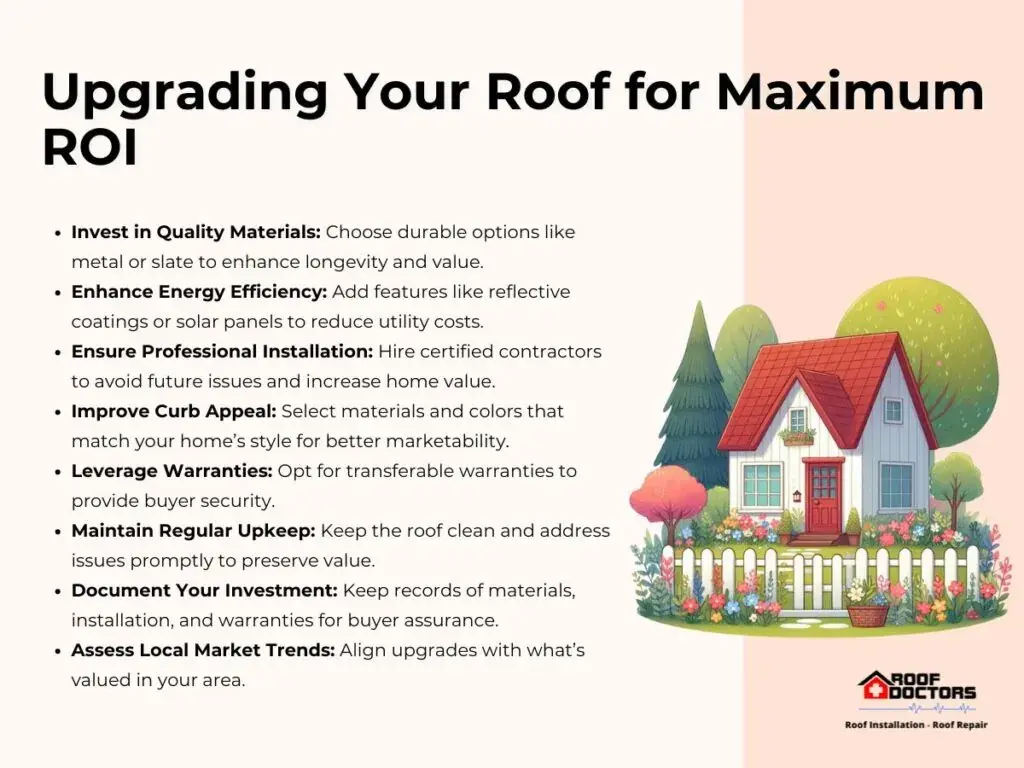
Invest in Quality Materials
Choose durable, high-end materials like metal or slate. While they may cost more initially, they enhance durability and appeal, increasing your home’s value.
Enhance Energy Efficiency
Opt for features that improve energy efficiency, such as reflective coatings or solar panels. These upgrades can lower utility costs and attract buyers interested in energy savings.
Ensure Professional Installation
Hire a certified contractor to ensure proper installation. A well-installed roof reduces future issues and adds value to your home.
Improve Curb Appeal
Select materials and colors that complement your home’s style. An attractive roof can enhance marketability and create a strong first impression.
Leverage Warranties
Choose materials with transferable warranties. This adds security for buyers and showcases the roof’s long-term protection.
Maintain Regular Upkeep
Keep the roof clean and address minor issues promptly. Regular maintenance preserves value and appeal.
Document Your Investment
Keep records of materials, installation, and warranties. This documentation demonstrates the quality of your upgrade to potential buyers.
Assess Local Market Trends
Understand what features are most valued in your area to ensure your upgrades align with local buyer preferences.
By following these strategies, you can maximize the ROI of your roofing upgrade, enhancing your home’s value and attractiveness to potential buyers.
Key Takeaways
A well-maintained roof is integral to a home’s value, safety, and energy efficiency. It significantly influences buyers’ perceptions and can impact appraisal outcomes and home inspection results. By focusing on high-quality materials, professional installation, and regular maintenance, homeowners can enhance their roof’s performance and appeal.
Upgrading your roof not only boosts the property’s market value but also maximizes return on investment (ROI). Understanding and addressing these key aspects ensures that your roofing investment contributes positively to your home’s overall worth and attractiveness in the real estate market.
Craig Young is the CEO of Roof Doctors and brings a background in finance, construction, and real estate to the company. He holds undergraduate degrees in International Business and Accounting and a Master's Degree in Finance. Craig is a licensed roofing contractor in California (CSLB #896271), Nevada (License #0095416), Arizona, and Florida (DBPR #CCC1333287), a HAAG Certified Roofing Inspector, and a California Licensed Real Estate Broker. He leads an EPA Lead-Safe Certified Firm and is a GAF Certified Plus Residential Roofing Contractor. He works in Xactimate and Cotality, the estimating platforms used for property assessment and insurance claim documentation. His experience spans construction, real estate, ranching, logging, land development, project management, and business operations.
Related articles
Roof Terminology: Parts of a Roof Explained
Understanding roof terminology is essential for homeowners, builders, and anyone involved in roof maintenance or repairs. A roof is more than just shingles; it consists of various structural and…
What Is The Best Roof Sealer?
Choosing the best roof sealer can be challenging due to the numerous brands and types of sealers in the market. Roof sealing is an essential step in maintaining the integrity of a roof and protecting…

Can You Paint Your Own Roof? Essential Tips to Consider
Painting your own roof is a feasible DIY project, but it requires careful preparation, the right materials, and safety precautions. You can paint your own roof if you have the right materials, safety…
Ready for a roof inspection?
Schedule a roof inspection and a roofing specialist will assess your roof, document its condition, and provide a clear written estimate. No advance deposit.