
Why Is My Ceiling Turning Brown?
 Craig YoungCEO9 min read
A ceiling turns brown when moisture, airborne particles, or trapped contaminants seep through the surface and discolor the paint or drywall. Although water intrusion is the most frequent cause, the staining itself is a warning sign that something beneath the surface needs attention.
This article explains how to identify ceiling stains, determine their seriousness, and take the right steps to fix and prevent them, including when professional help is needed and how to avoid repeat issues.
The Common Culprits: Why the Color Brown?
Brown ceiling stains form because certain substances, especially moisture, particles, and chemicals leave behind pigmented residues as they dry, oxidize, or age. The color brown is a strong indicator of contamination rather than surface-level dirt, helping narrow down what’s happening above or within the ceiling.
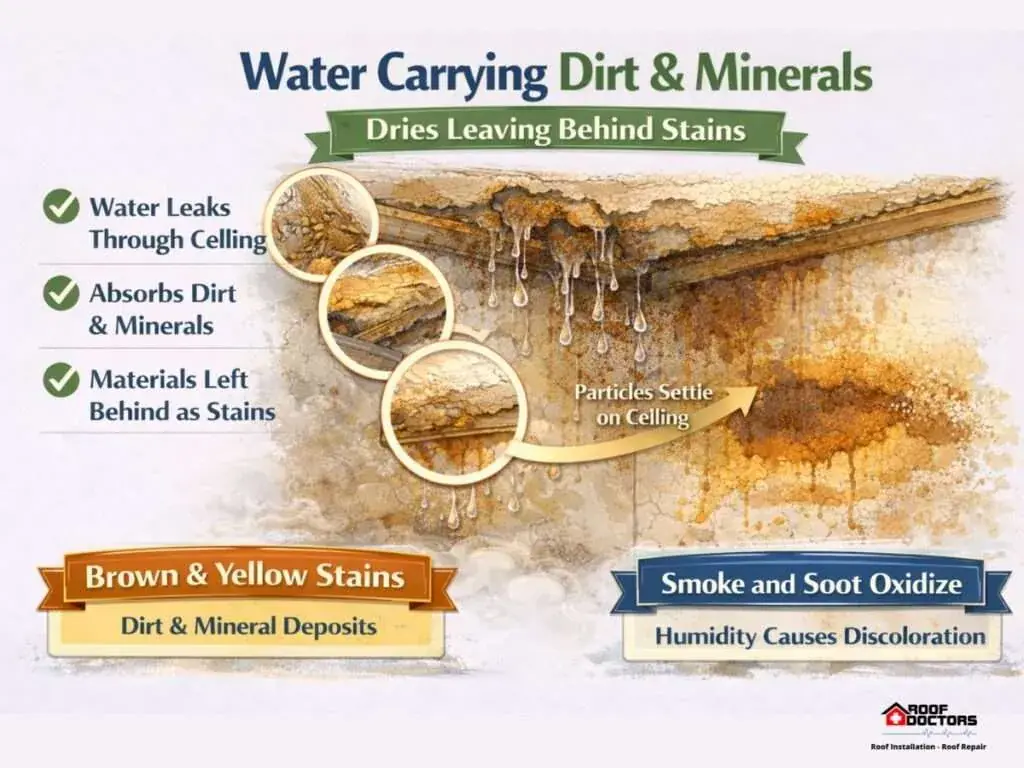
1. Water Carrying Dirt and Minerals
As water leaks through ceilings, it absorbs dirt and mineral deposits from wood, drywall, and insulation. When the water dries, those materials remain behind as brown or yellow stains.
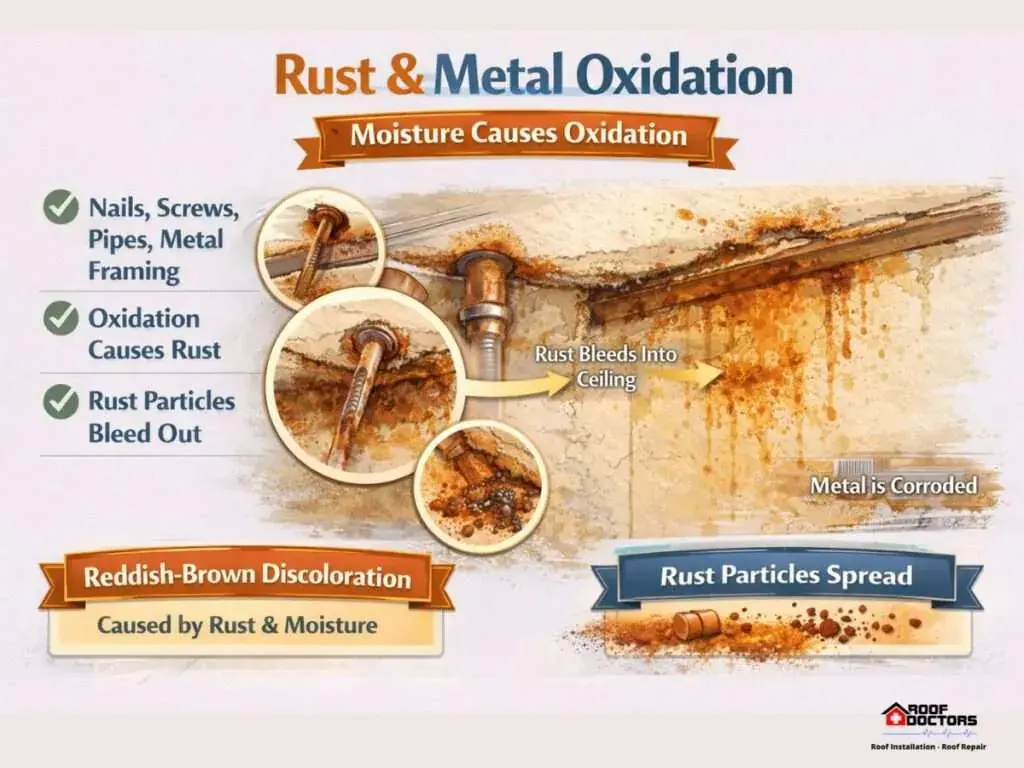
2. Rust and Metal Oxidation
Moisture contacting nails, screws, pipes, or metal framing causes oxidation. Rust particles then bleed into surrounding materials, creating reddish-brown discoloration on the ceiling.
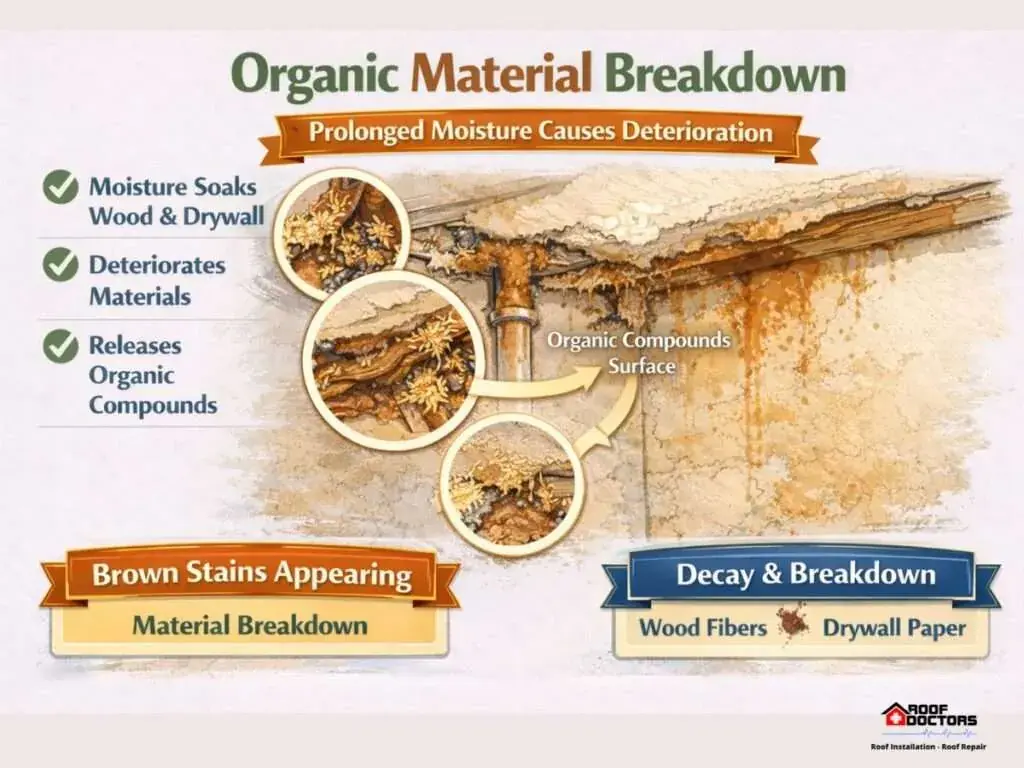
3. Organic Material Breakdown
Prolonged moisture causes wood fibers and drywall paper to deteriorate. This breakdown releases organic compounds that surface as brown stains.
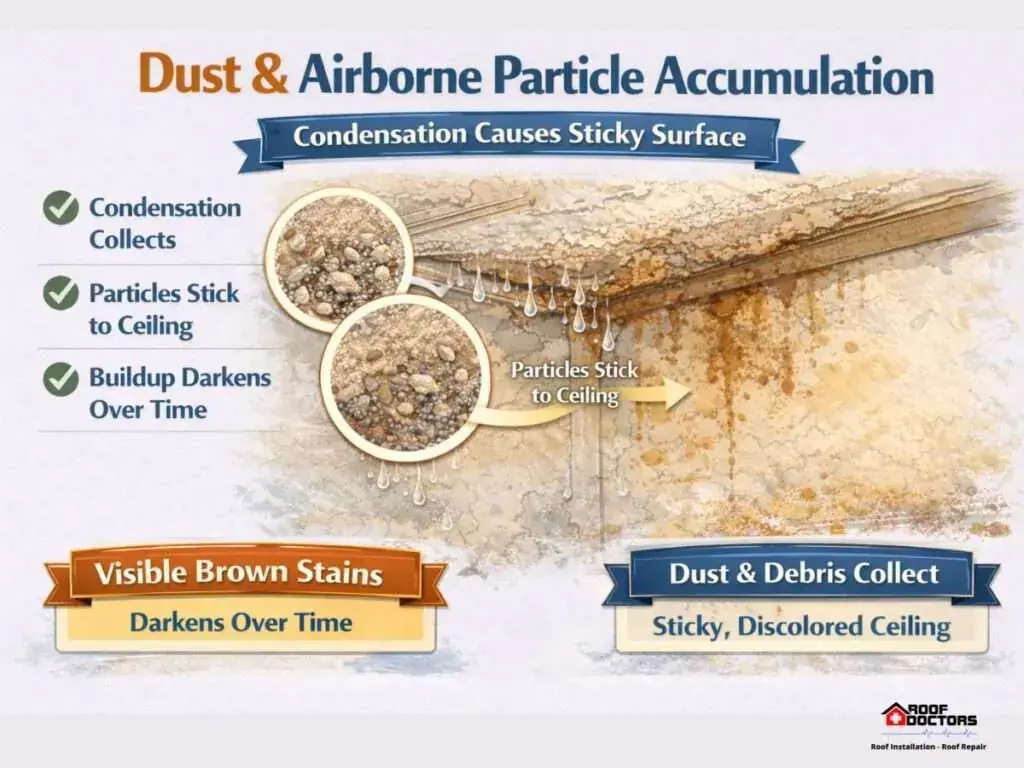
4. Dust and Airborne Particle Accumulation
Condensation makes ceilings sticky, allowing dust and airborne debris to cling to the surface. Over time, this buildup darkens and becomes visibly brown.
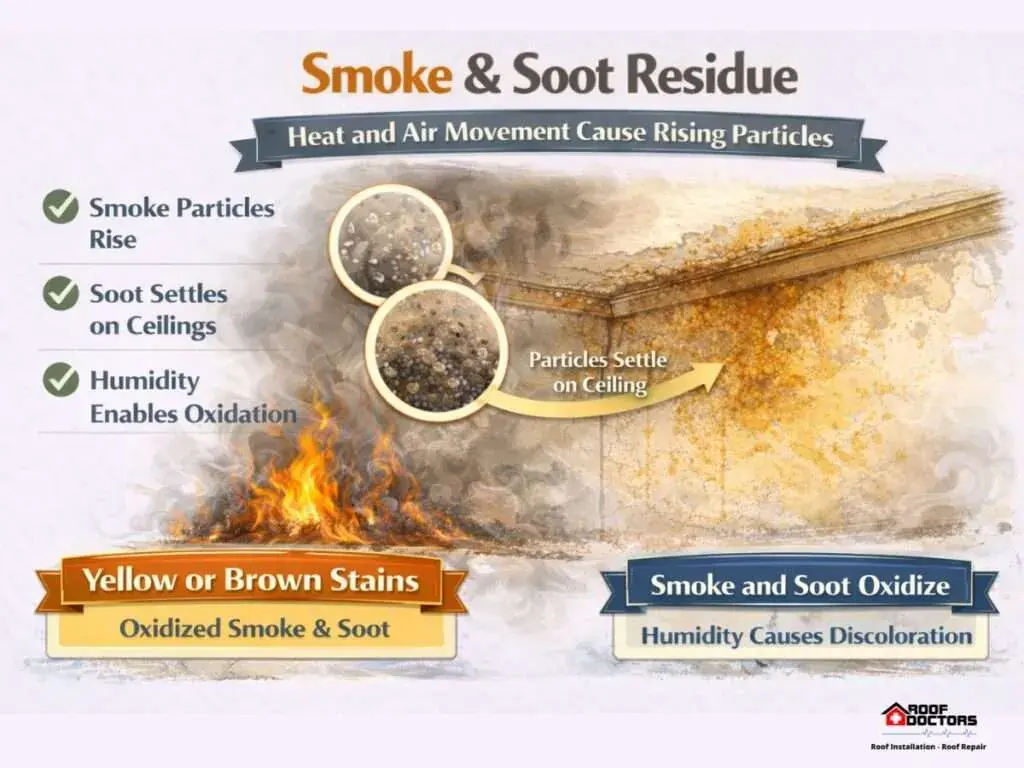
5. Smoke and Soot Residue
Smoke particles rise and settle on ceilings due to heat and air movement. When combined with humidity, these particles oxidize and turn yellow or brown.
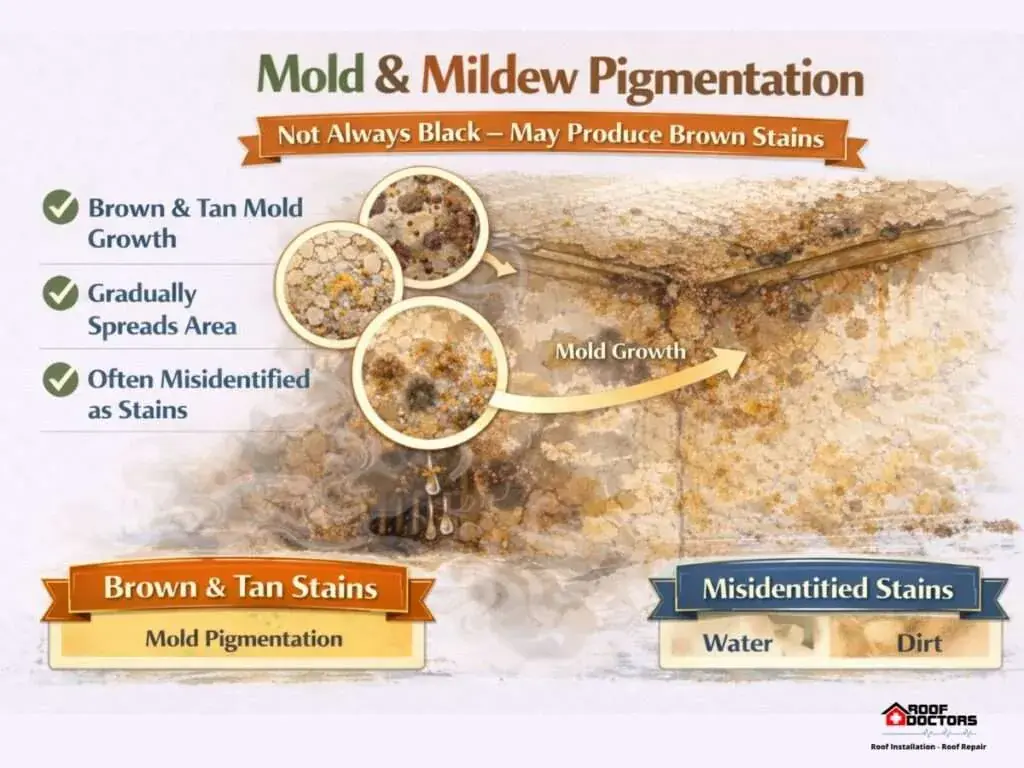
6. Mold and Mildew Pigmentation
Not all mold is black, some species produce brown or tan staining. These stains can spread slowly and are often mistaken for water or dirt marks.
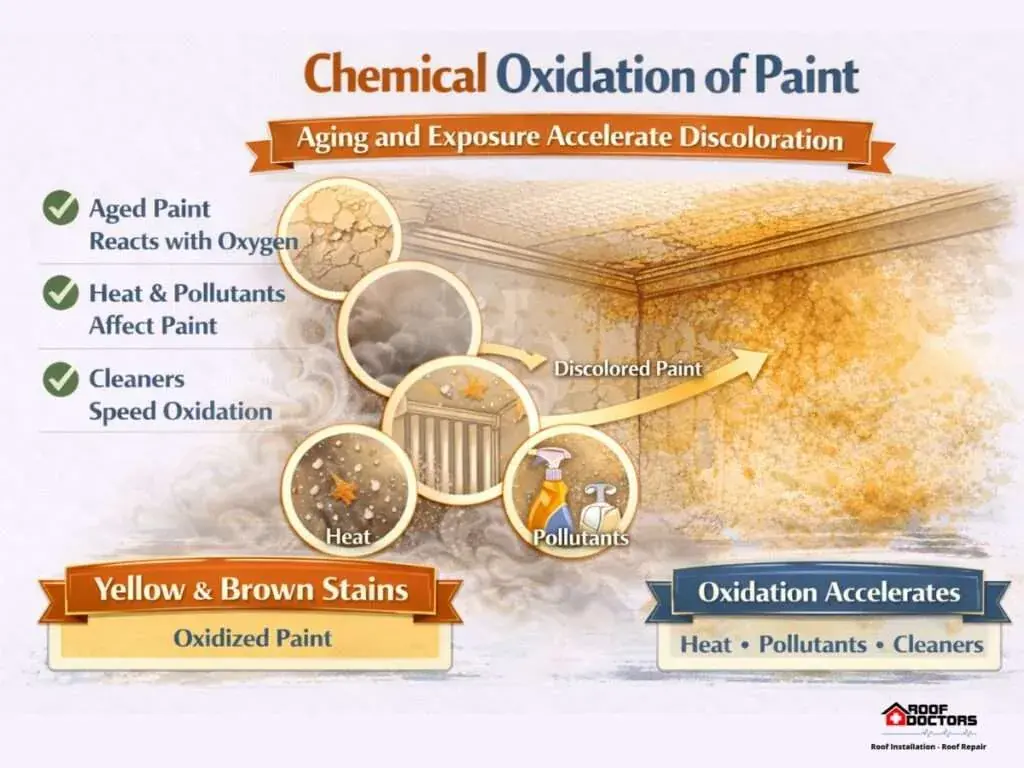
7. Chemical Oxidation of Paint
Certain paints naturally discolor as they age and react with oxygen. Heat, indoor air pollutants, and cleaning chemicals can speed up this browning process.
8. Tannin Bleed From Wood Products
Wood framing and plywood contain natural tannins that release when exposed to moisture. These tannins migrate through drywall and paint, leaving tea-colored stains.

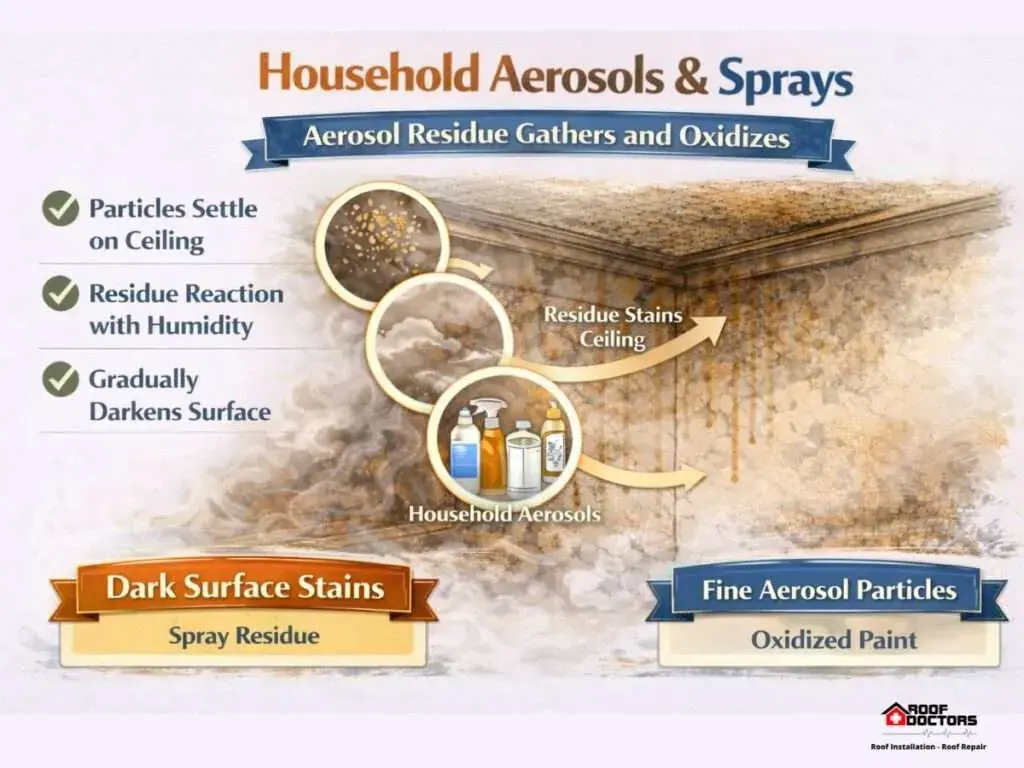
9. Household Aerosols and Sprays
Aerosols release fine particles that rise and settle on ceilings. Over time, these residues react with humidity and darken the paint surface.
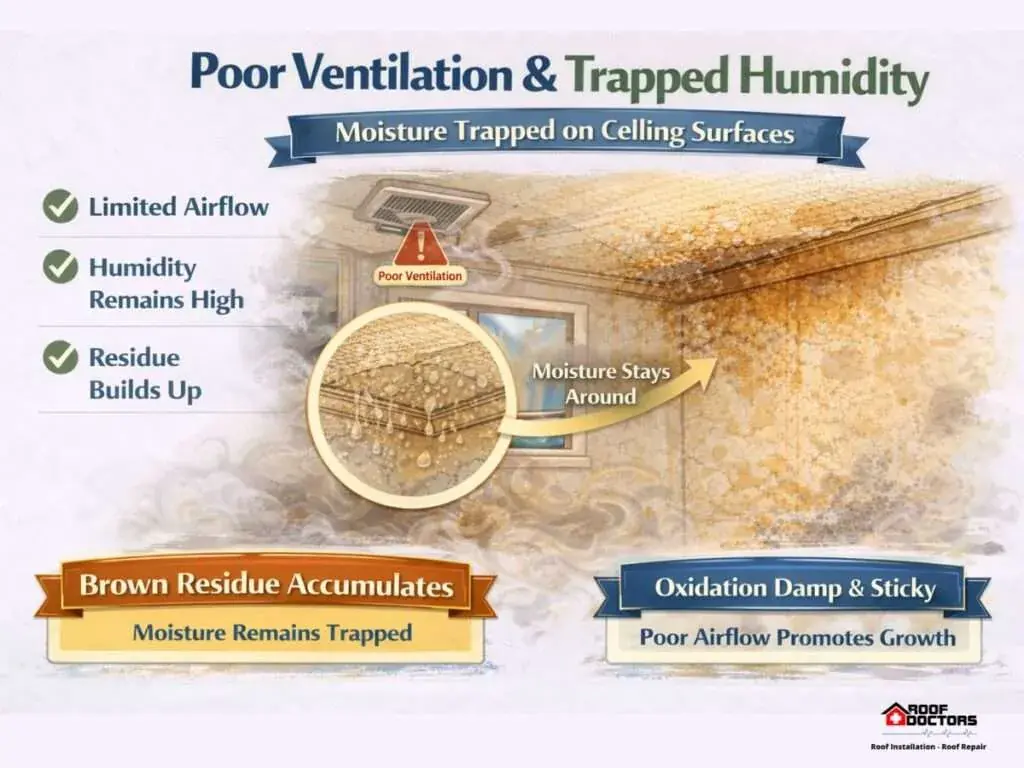
10. Poor Ventilation and Trapped Humidity
In poorly ventilated spaces, moisture lingers on ceiling surfaces. This trapped humidity promotes residue buildup that gradually turns brown.
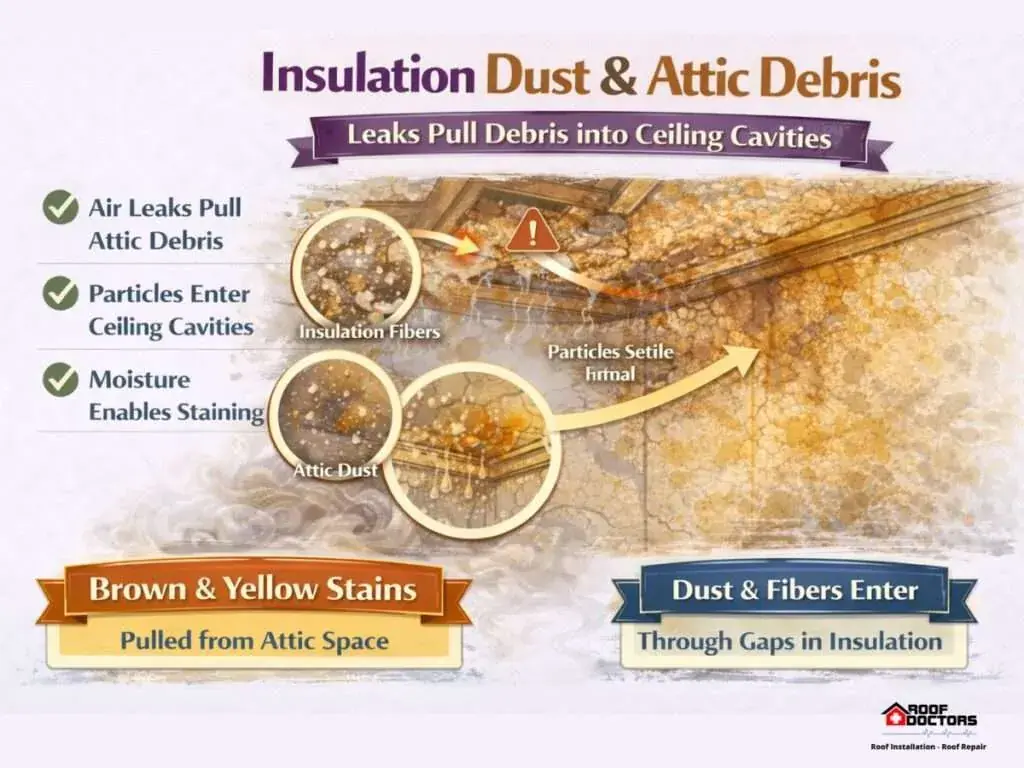
11. Insulation Dust and Attic Debris
Air leaks can pull insulation fibers and attic dust into ceiling cavities. When moisture is present, these particles stain the ceiling from within.
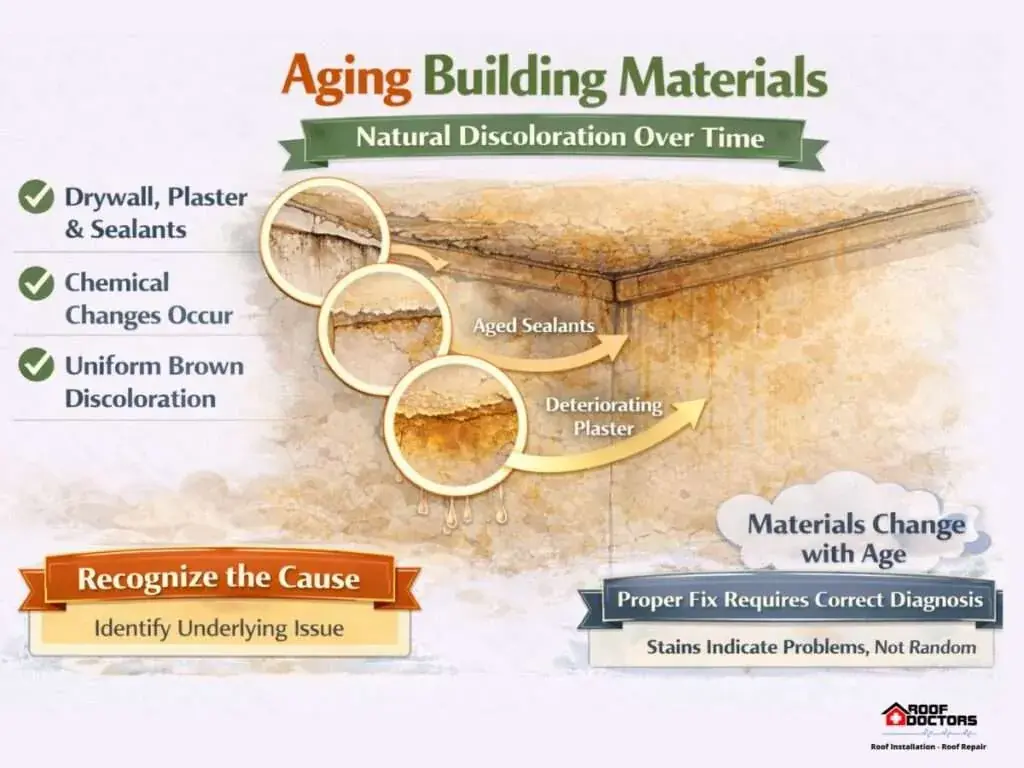
12. Aging Building Materials
As drywall, plaster, and sealants age, chemical changes naturally occur. These changes often appear as uniform brown or yellow discoloration over time.
Brown ceiling stains are not random; they are the result of moisture, particles, chemical reactions, or material breakdown. Recognizing why the discoloration appears brown helps identify the underlying issue and prevents ineffective cosmetic fixes.
How to Diagnose the Problem
Diagnosing the cause of a brown ceiling stain involves careful observation and investigation to pinpoint whether it’s water, mold, smoke, or material-related. Identifying the source early can prevent further damage and guide the right repair method.
- Inspect the Stain’s Location and Pattern – Note whether the stain is near plumbing, exterior walls, or vents, and check its shape or spread. Patterns can indicate the type of source, such as leaks or condensation.
- Observe Changes Over Time – Monitor if the stain grows after rain, showers, or high humidity. Growth patterns can reveal active leaks or moisture accumulation.
- Check the Attic or Crawl Space – Look for roof leaks, water stains, or mold above the ceiling. This helps confirm whether the source is from above.
- Examine Plumbing Fixtures and Pipes – Inspect bathrooms, kitchens, and laundry areas for leaks or condensation. Even small drips can cause ceiling discoloration over time.
- Evaluate Ventilation and Humidity – Measure humidity levels and check airflow in affected rooms. Poor ventilation often contributes to persistent brown stains.
- Look for Signs of Mold or Mildew – Check for fuzzy, spotty, or musty-smelling areas on the ceiling. Mold may indicate long-term moisture problems.
- Consider Smoke or Airborne Particles – Review usage of fireplaces, candles, or smoking indoors. Residue from smoke or aerosols can accumulate over time and darken ceilings.
A systematic diagnosis using visual inspection, moisture checks, and ventilation evaluation helps identify the true cause of brown ceiling stains. Correctly pinpointing the problem ensures the proper solution rather than temporary cosmetic fixes.
How to Fix and Prevent Brown Ceiling Stains
Fixing and preventing brown ceiling stains requires addressing the underlying cause while restoring the surface. Combining repair with preventive measures ensures the stains don’t return.
- Repair Water Leaks Promptly – Fix roof, plumbing, or HVAC leaks as soon as they are detected. Stopping the source of moisture prevents further staining and damage.
- Dry and Clean Affected Areas – Use fans, dehumidifiers, or towels to remove moisture. Clean the ceiling to eliminate dirt, dust, or organic residues.
- Remove Mold and Mildew Safely – Scrub affected areas with appropriate cleaners or hire professionals for large infestations. Eliminating mold prevents health risks and recurring stains.
- Apply Stain-Blocking Primer – Use a shellac– or oil-based primer before repainting. This seals any residual discoloration and prevents it from bleeding through the new paint.
- Repaint with Quality Paint – Choose high-quality, moisture-resistant paint for ceilings. This improves durability and reduces yellowing or browning over time.
- Improve Ventilation and Humidity Control – Install exhaust fans in kitchens and bathrooms, or use dehumidifiers in humid areas. Proper airflow prevents condensation that leads to stains.
- Regularly Inspect Ceilings – Check for small leaks, discoloration, or moisture buildup periodically. Early detection makes repairs easier and less costly.
- Address Airborne Pollutants – Limit indoor smoking, reduce candle usage, and use air purifiers if needed. Controlling airborne particles helps prevent residue accumulation.
Properly fixing brown ceiling stains involves both correcting the root cause and restoring the surface. Preventive measures like ventilation, maintenance, and high-quality materials keep ceilings clean and stain-free in the long term.
When to Call a Professional
While some ceiling stains can be managed with DIY fixes, certain situations require professional expertise. Recognizing the warning signs ensures timely intervention, protects your home, and prevents costly damage.
1. Rapidly Growing or Recurrent Stains
If a brown stain expands quickly or keeps returning after temporary fixes, it may indicate an ongoing leak or hidden moisture issue. Professionals can trace the source accurately and implement a lasting solution.
2. Sagging, Cracking, or Structural Damage
Visible ceiling deformation suggests that water or structural issues have weakened the material. A professional can safely repair the damage and prevent potential collapse.
3. Large Mold Infestations
Widespread mold poses serious health risks and requires proper remediation. Experts can safely remove mold, treat affected areas, and prevent future growth.
4. Unidentified Moisture Sources
When stains persist but the source isn’t apparent, a professional inspection can reveal hidden leaks, faulty plumbing, or roof problems. Correct identification is essential to prevent recurring stains.
5. Persistent Odors or Air Quality Concerns
Musty smells, chemical odors, or poor indoor air quality alongside staining may indicate mold, rot, or chemical buildup. Professionals can assess the environment and recommend corrective measures.
Calling a professional ensures that ceiling problems are correctly diagnosed and effectively repaired. Early intervention safeguards your home’s structure, maintains air quality, and prevents further damage or costly repairs.
Common Mistakes Homeowners Make
Homeowners often try quick fixes for brown ceiling stains, which can worsen the problem. Understanding common errors helps avoid recurring damage and unnecessary costs.
- Painting Over Stains Without Fixing the Source – Covering the discoloration without addressing leaks or moisture allows stains to return.
- Skipping Stain-Blocking Primer – Applying paint directly over stains can cause them to bleed through the new coat.
- Ignoring Small or Slow-Growing Discoloration – Delaying action allows moisture or mold to worsen, making repairs more extensive.
- Relying on Fans Instead of Proper Ventilation – Fans alone do not remove humidity or condensation, so stains can continue developing.
- Using Low-Quality Paint – Cheap paints may yellow or brown faster, making ceilings look worse over time.
Avoiding these mistakes ensures that brown ceiling stains are effectively treated. Proper diagnosis, preparation, and preventive measures help maintain a clean, healthy, and long-lasting ceiling.
Maintenance Tips to Keep Ceilings Clean and Stain-Free
Regular maintenance is key to preventing brown stains and preserving your ceiling’s appearance. Consistent inspection and care help catch problems early and reduce long-term damage.
1. Inspect Ceilings Seasonally
Check your ceilings for small spots, cracks, or discoloration at least twice a year. Early detection of leaks or mold prevents larger, costlier repairs.
2. Maintain Roof, Plumbing, and HVAC Systems
Regularly service your roof, plumbing, and HVAC systems to prevent leaks and water buildup. Well-maintained systems reduce the risk of ceiling stains caused by moisture intrusion.
3. Use Exhaust Fans in Kitchens and Bathrooms
Run exhaust fans during cooking or showers to reduce humidity. Proper ventilation prevents condensation that can lead to brown stains.
4. Control Indoor Humidity
Use dehumidifiers in damp areas and maintain proper airflow throughout the home. Lower humidity levels help prevent mold, mildew, and moisture-related discoloration.
5. Address Minor Leaks Immediately
Repair small leaks as soon as they are noticed, even if they seem insignificant. Prompt action stops stains from forming and protects structural materials.
6. Clean Ceilings Periodically
Dust and clean ceilings using a soft cloth or vacuum with a brush attachment. Regular cleaning prevents airborne particles from accumulating and turning brown over time.
Consistent maintenance, timely repairs, and good ventilation are essential to keeping ceilings clean and stain-free. These practices not only improve appearance but also extend the life of your ceiling and protect your home’s structure.
Bottom Line
Brown ceiling stains are rarely just a cosmetic issue; they usually signal underlying problems like moisture, mold, smoke, or material breakdown. Identifying the cause early is crucial for effective repair and long-term prevention.
By addressing leaks, improving ventilation, using quality materials, and maintaining regular inspections, homeowners can restore their ceilings and prevent future discoloration. Proper diagnosis, prompt action, and consistent maintenance are the keys to keeping ceilings clean, safe, and visually appealing.
Craig Young is the CEO of Roof Doctors and brings a background in finance, construction, and real estate to the company. He holds undergraduate degrees in International Business and Accounting and a Master's Degree in Finance. Craig is a licensed roofing contractor in California (CSLB #896271), Nevada (License #0095416), Arizona, and Florida (DBPR #CCC1333287), a HAAG Certified Roofing Inspector, and a California Licensed Real Estate Broker. He leads an EPA Lead-Safe Certified Firm and is a GAF Certified Plus Residential Roofing Contractor. He works in Xactimate and Cotality, the estimating platforms used for property assessment and insurance claim documentation. His experience spans construction, real estate, ranching, logging, land development, project management, and business operations.
Related articles

DIY Tips to Patch Your Roof Like a Pro
Roof damage is one of those things you don’t want to ignore. The idea of patching your own roof might feel overwhelming at first, but with the right tools and a step-by-step approach, it’s absolutely…

The Role of Roof Leak Specialists: Ensuring Effective Leak Detection and Repair
What’s the role of roof leak specialists? Roof leaks, while often perceived as minor nuisances, can escalate into major issues if left unaddressed. The expertise of roof leak specialists is crucial…

The Role of Proper Roof Ventilation in Preventing Roof Leaks and Issues
In the world of home construction and maintenance, the importance of a well-ventilated roof is often overlooked. Yet, it plays a crucial role in maintaining the overall health of a home. Proper roof…
Ready for a roof inspection?
Schedule a roof inspection and a roofing specialist will assess your roof, document its condition, and provide a clear written estimate. No advance deposit.