
How Long Does a Concrete Roof Last?
 Craig YoungCEO8 min read
A concrete roof can last 50 to 100 years or more when properly designed, installed, and maintained, making it one of the longest-lasting roofing systems available today. Known for its exceptional strength, resistance to fire, rot, and extreme weather, a concrete roof offers long-term protection and stability, often outlasting the building itself while requiring far less frequent replacement than many other roofing materials.
This article explores the various types of concrete roofs, the critical factors that influence their lifespan, warning signs of wear, and effective maintenance strategies to maximize durability, while also emphasizing long-term cost savings and eco-friendly benefits.
Understanding Concrete Roofs
Concrete roofs are known for their strength, longevity, and ability to withstand harsh environmental conditions. They are commonly used in both residential and commercial buildings where durability and low maintenance are priorities.
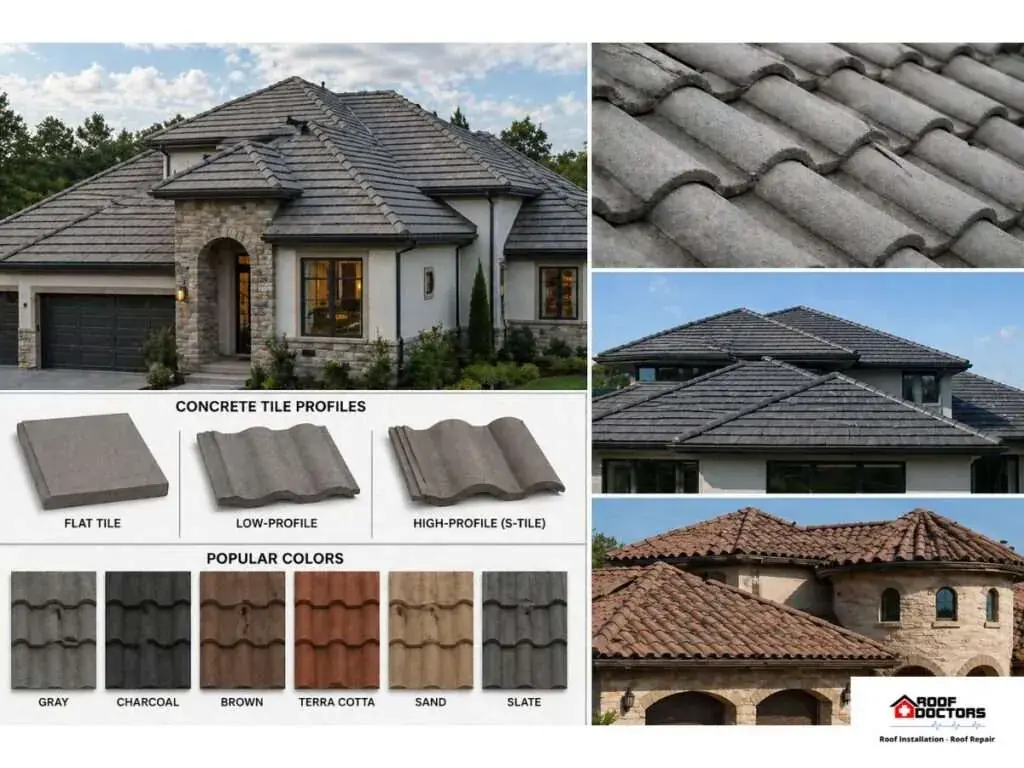
1. Concrete Tile Roofs
Concrete tile roofs are made from molded concrete units designed to mimic materials such as clay or slate. They are durable, fire-resistant, and offer design flexibility while being lighter than poured concrete systems.
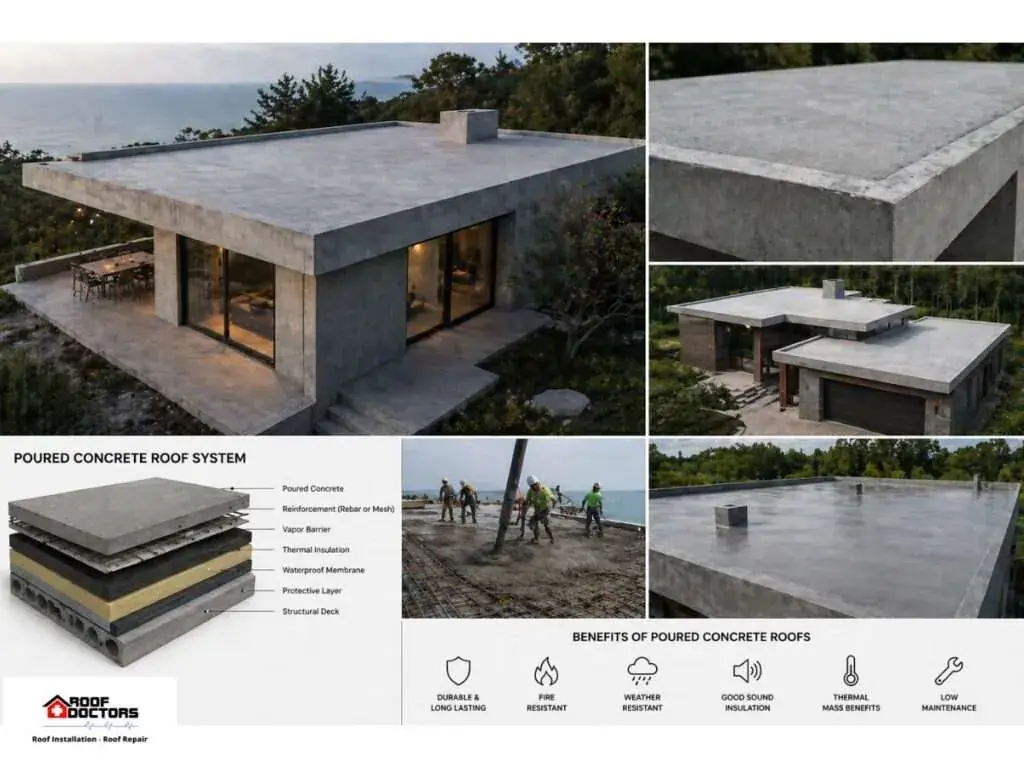
2. Poured Concrete Roofs
Poured concrete roofs are formed by casting concrete directly onto a structural framework or slab. This type of roof provides exceptional structural integrity, making it ideal for flat or low-slope applications and heavy-load requirements.
Understanding the differences between concrete tile and poured concrete roofs helps property owners select the best option for their structural and aesthetic needs. Both types offer long-lasting performance when properly installed and maintained.
Average Lifespan of Concrete Roofs
Concrete roofs are widely recognized for their exceptional longevity compared to most other roofing materials. When properly installed and maintained, they offer decades of reliable protection and structural stability.
1. Concrete Tile Roofs
Concrete tile roofs typically last between 50 and 70 years, with high-quality tiles often exceeding this range. Their durability depends on proper installation, underlayment quality, and routine maintenance to prevent moisture intrusion.
2. Poured Concrete Roofs
Poured concrete roofs can last 60 to 100 years or more, especially when reinforced and properly waterproofed. Their solid, monolithic structure makes them highly resistant to impact, fire, and extreme weather conditions.
Both concrete tile and poured concrete roofs provide outstanding lifespan benefits, making them a long-term investment. The final lifespan ultimately depends on construction quality, environmental exposure, and ongoing care.
Factors Affecting Lifespan
The longevity of a concrete roof depends on several key factors that influence its durability and performance over time. By understanding these factors, homeowners can take steps to protect their investment and ensure the roof reaches its full potential.
1. Quality of Materials
Using high-quality cement, aggregates, and additives improves strength and resistance to cracking, erosion, and weathering. Superior materials help the roof withstand environmental stress for decades.
2. Installation and Design
Proper installation, correct roof slope, and effective flashing are critical to prevent leaks and structural issues. Poor workmanship can significantly reduce a roof’s lifespan, even with premium materials.
3. Climate and Weather Conditions
Exposure to freeze-thaw cycles, heavy rainfall, or extreme heat can accelerate wear and damage. Roofs in harsh climates may require additional protective measures to maintain durability.
4. Maintenance Practices
Regular inspections, cleaning debris, and repairing minor damage prevent small problems from becoming major issues. Proper maintenance directly contributes to a longer, trouble-free lifespan.
5. Reinforcement and Structural Support
Steel reinforcement and proper structural design reduce cracking and sagging, especially for flat or poured concrete roofs. Strong support ensures the roof maintains its integrity under heavy loads.
In short, a concrete roof’s lifespan is influenced by materials, installation, climate, maintenance, and structural support. Addressing these factors proactively helps ensure the roof remains strong, durable, and reliable for decades.
Signs Your Concrete Roof May Need Attention
Even the most durable concrete roofs can show signs of wear over time, and recognizing these early can prevent costly repairs. Regular monitoring helps maintain the roof’s integrity and prolongs its lifespan.
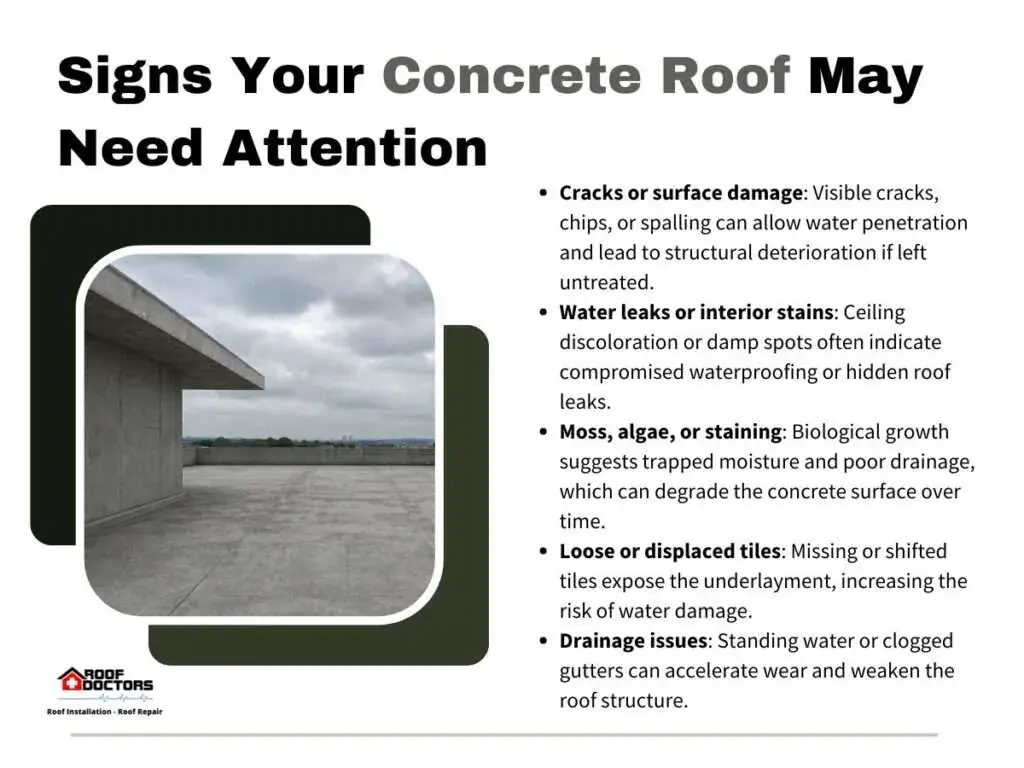
1. Cracks or Surface Damage
Visible cracks, chips, or spalling on tiles or slabs can allow water to seep into the roof structure. Addressing these issues promptly prevents further deterioration and potential structural damage.
2. Water Leaks or Interior Stains
Water stains on ceilings or walls indicate possible leaks or compromised waterproofing. Ignoring leaks can lead to mold growth and weakened structural components.
3. Moss, Algae, or Staining
Moss or algae growth often signals trapped moisture or poor drainage. Over time, this biological buildup can degrade the roof surface and reduce its lifespan.
4. Loose or Displaced Tiles
Shifting, cracked, or missing tiles expose the underlayment and roof deck to weather damage. Immediate repair prevents water penetration and maintains the roof’s protective function.
Identifying signs of wear early—such as cracks, leaks, biological growth, or displaced tiles—is essential for preserving a concrete roof. Prompt attention to these warning signs helps ensure long-term durability and prevents costly damage.
Maintenance Tips for a 75-Year Roof
A concrete roof designed to last 75 years or more requires consistent but relatively minimal maintenance to achieve its full lifespan. Routine care helps prevent moisture damage, surface deterioration, and structural issues that can shorten its longevity.
| Maintenance Task | Recommended Frequency | Purpose |
| Roof Inspection | Every 3–5 years | Identifies cracks, loose tiles, and early signs of wear |
| Debris Removal | 1–2 times per year | Prevents moisture buildup and biological growth |
| Gutter & Drain Cleaning | Annually | Ensures proper water flow and prevents ponding |
| Crack Repair | As needed | Stops water infiltration and further cracking |
| Waterproof Sealing | Every 10–15 years | Protects concrete from moisture and weather exposure |
| Moss & Algae Treatment | As needed | Prevents surface damage and staining |
In addition to scheduled maintenance, promptly addressing minor issues such as hairline cracks or displaced tiles can prevent costly repairs later. Using professional roofing inspections periodically is especially beneficial for older roofs.
In conclusion, maintaining a 75-year concrete roof is primarily about prevention rather than repair. With regular inspections, proper drainage, and timely sealing, a concrete roof can remain structurally sound and visually appealing for decades.
Maximizing Your Roof’s Lifespan
While concrete roofs are built for long-term durability, taking proactive steps can significantly extend their service life. Proper planning, professional care, and regular upkeep ensure the roof performs at its best for decades.
1. Choose High-Quality Materials
Selecting premium concrete materials improves resistance to cracking, weathering, and moisture penetration. Higher-quality mixes and coatings also reduce long-term maintenance needs.
2. Hire Experienced Roofing Professionals
Professional installation ensures proper slope, flashing, reinforcement, and waterproofing. Skilled workmanship prevents early failures caused by design or installation errors.
3. Apply Waterproof Sealants
Waterproof coatings protect the concrete surface from moisture absorption and environmental damage. Reapplying sealants at recommended intervals helps maintain the roof’s integrity.
4. Schedule Regular Inspections
Routine inspections allow small issues to be identified and repaired before they worsen. Early intervention reduces repair costs and prevents structural damage.
5. Maintain Proper Drainage
Keeping drains and gutters clear prevents standing water that can weaken concrete over time. Proper drainage also reduces the risk of leaks and surface deterioration.
Maximizing a concrete roof’s lifespan depends on quality materials, expert installation, and ongoing maintenance. With these measures in place, a concrete roof can meet or exceed its expected lifespan and remain a reliable long-term investment.
Cost and Investment Considerations
Concrete roofs often have a higher initial cost than alternatives like asphalt or wood shingles, but their longevity and durability make them a smart long-term investment. Understanding the financial aspects helps homeowners weigh upfront expenses against long-term benefits.
1. Initial Installation Cost
Installing a concrete roof can be more expensive due to the cost of materials and specialized labor. However, this upfront investment is balanced by the roof’s extended lifespan and minimal maintenance needs.
2. Long-Term Savings
Concrete roofs require fewer repairs and replacements over decades, reducing ongoing maintenance expenses. These savings make the roof more cost-effective than cheaper materials in the long run.
3. Resale Value
A well-maintained concrete roof can increase property value by offering potential buyers a durable, low-maintenance feature. Homes with long-lasting roofs are often more appealing in the real estate market.
In conclusion, while the initial cost of a concrete roof may be higher, its long-term financial benefits, reduced maintenance needs, and positive impact on property value make it a worthwhile investment.
Environmental and Energy Benefits
Concrete roofs are not only long-lasting but also offer significant environmental and energy advantages. Their design and materials help reduce energy consumption, minimize waste, and support sustainable building practices.
1. Energy Efficiency
Concrete roofs have high thermal mass, which helps regulate indoor temperatures by absorbing and slowly releasing heat. This reduces the need for heating and cooling, lowering energy bills over the roof’s lifespan.
2. Sustainable Materials
Many concrete roofs incorporate recycled materials, reducing the environmental impact of production. Using durable, long-lasting materials also decreases the frequency of replacements, further conserving resources.
3. Reduced Waste
Because concrete roofs last decades longer than many alternatives, they generate far less construction and demolition waste. This helps minimize landfill contributions and supports environmentally responsible building practices.
Concrete roofs provide both energy savings and environmental benefits. Their efficiency, use of sustainable materials, and reduced waste make them a smart choice for eco-conscious homeowners seeking long-term durability.
Bottom Line
Concrete roofs rank among the most durable and long-lasting roofing options, often lasting 50 to 100 years or more with proper installation and care. Their strength, resistance to fire and harsh weather, and minimal maintenance requirements make them a dependable choice for homeowners seeking long-term protection.
This article explored the different types of concrete roofs, the factors that influence their lifespan, and common signs of wear that indicate attention is needed. It also covered key maintenance strategies and tips to extend durability, while addressing cost considerations and environmental and energy benefits, demonstrating why concrete roofs are a smart, long-lasting, and eco-friendly investment for homeowners.
Craig Young is the CEO of Roof Doctors and brings a background in finance, construction, and real estate to the company. He holds undergraduate degrees in International Business and Accounting and a Master's Degree in Finance. Craig is a licensed roofing contractor in California (CSLB #896271), Nevada (License #0095416), Arizona, and Florida (DBPR #CCC1333287), a HAAG Certified Roofing Inspector, and a California Licensed Real Estate Broker. He leads an EPA Lead-Safe Certified Firm and is a GAF Certified Plus Residential Roofing Contractor. He works in Xactimate and Cotality, the estimating platforms used for property assessment and insurance claim documentation. His experience spans construction, real estate, ranching, logging, land development, project management, and business operations.
Related articles
How Much Is a Permit for Roof Replacement in California?
If you’re planning a roof replacement in California, one of the first questions homeowners ask is: how much is a permit for roof replacement? The short answer is that roof replacement permits in…

Should I Stay Home During Roof Replacement? What Homeowners Need to Know
No, you don’t have to stay home during a roof replacement and in many cases, it’s actually more comfortable to leave while the work is being done. A roof replacement is one of the most important…

How Much Does Gutter Cleaning Cost?
Gutter cleaning costs range from $75-$400 for a standard residential property, with the national average near $225 per service visit. A 2000 sq. ft. ranch on a single slab requires different labor…
Ready for a roof inspection?
Schedule a roof inspection and a roofing specialist will assess your roof, document its condition, and provide a clear written estimate. No advance deposit.