

How Much Is a Permit for Roof Replacement in California?
 Craig YoungCEO8 min read
If you’re planning a roof replacement in California, one of the first questions homeowners ask is: how much is a permit for roof replacement? The short answer is that roof replacement permits in California typically range from $150 to $1,000 or more, depending on your location, the size of your roof, and the complexity of the project.
However, the real answer is a bit more nuanced. Permit costs can vary widely between cities, and understanding what you’re paying for and why can help you avoid delays, fines, or unexpected expenses. In this guide, we’ll walk you through everything you need to know about roofing permits in California, including costs, requirements, timelines, and tips for a smooth process.
Do You Need a Permit for Roof Replacement in California?
In most cases, yes a permit is required for roof replacement in California.
Local building departments enforce permit requirements to ensure that all roofing work meets current California Building Code (CBC) standards. These regulations are designed to protect homeowners by ensuring roofs are properly installed, structurally sound, and capable of withstanding weather conditions like heavy rain, wind, and extreme heat.

When a Permit Is Required
You will almost always need a permit if:
- You’re doing a full roof replacement or tear-off
- You’re installing a new type of roofing material
- Structural repairs or decking replacement are involved
- The roof has already reached the maximum allowed number of layers
When a Permit Might Not Be Required
In some limited cases, a permit may not be necessary, such as:
- Minor repairs (like replacing a few shingles)
- Small maintenance work that doesn’t affect the structure
However, rules vary by city, so it’s always best to confirm with your local building department or contractor before starting any work.
How Much Is a Roof Replacement Permit in California?
Permit costs in California can vary significantly depending on where you live and the scope of your project. While there’s no fixed statewide fee, most homeowners fall within a general range.
Typical Permit Cost Range
- Basic or small projects: $150 – $400
- Standard residential roof replacement: $400 – $750
- Large, complex, or high-value projects: $750 – $1,000+
In some major cities or high-cost areas, fees can exceed $1,000, especially if multiple inspections or structural upgrades are required.
What Factors Affect Permit Costs?
Understanding what goes into permit pricing can help you better estimate your total roofing budget.
1. Location (City or County)
Permit fees are set at the local level, meaning each city has its own pricing structure. For example:
- Larger cities often charge higher fees due to administrative costs
- Smaller municipalities may have lower, flat-rate permits
2. Roof Size and Project Valuation
Many building departments calculate permit fees based on:
- Square footage of the roof
- Total project cost (valuation-based fees)
Larger homes or more expensive roofing systems typically result in higher permit costs.
3. Roofing Material Type
The type of material you choose can impact both cost and inspection requirements:
- Asphalt shingles: Typically straightforward and lower-cost permits
- Tile or slate: Heavier materials that may require structural review
- Metal roofing: May involve additional compliance checks
4. Structural Modifications
If your roof replacement includes:
- Replacing damaged decking
- Reinforcing the structure
- Changing roof pitch or design
…you may need additional approvals, increasing permit costs.
5. Number of Required Inspections
Some jurisdictions require:
- Mid-project inspections
- Final inspections
- Special inspections for structural components
More inspections can increase administrative fees.
Who Handles the Roofing Permit?
For most homeowners, the good news is you typically won’t have to handle the permit process yourself.
Contractor Responsibility
A licensed roofing contractor will usually take care of everything, including:
- Pulling the permit on your behalf
- Submitting all required documentation
- Scheduling and coordinating inspections
- Ensuring the project meets all local building codes and regulations
Why This Matters
Working with a contractor who manages permits doesn’t just save you time—it also protects you from potential issues. It ensures:
- Your project remains fully compliant with local requirements
- Inspections are completed correctly and on schedule
- You avoid costly delays, fines, or legal complications down the line
Before starting your project, it’s always a good idea to confirm that permit handling is included in your contractor’s scope of work.
What Happens If You Skip the Permit?
Skipping a roofing permit might seem like a quick way to save time or money, but it can create serious headaches down the road. From legal penalties to safety risks, the consequences often far outweigh any short-term benefit. Here’s a breakdown of what could happen if you go unpermitted:
| Consequence | Details |
| Fines and Stop-Work Orders | Local authorities can issue fines or completely halt your roofing project until the proper permits are obtained. This can delay your timeline and increase costs. |
| Problems When Selling Your Home | Unpermitted roofing work is often discovered during home inspections. This can delay closing, reduce buyer confidence, and even lower your property value. |
| Insurance Complications | If damage occurs on a roof that wasn’t permitted or inspected, insurance companies may deny claims, leaving you financially responsible for repairs. |
| Safety and Quality Risks | Permits require inspections, which help catch issues such as leaks, structural problems, or improper installation. Skipping this step increases the risk of premature roof failure or safety hazards. |
Bottom Line: While skipping a permit might save a little money upfront, the potential legal, financial, and safety risks make it a gamble you don’t want to take. Always ensure your roofing project is properly permitted and inspected.
How to Get a Roof Replacement Permit in California
If you’re applying for a permit yourself, here’s what the process usually looks like:
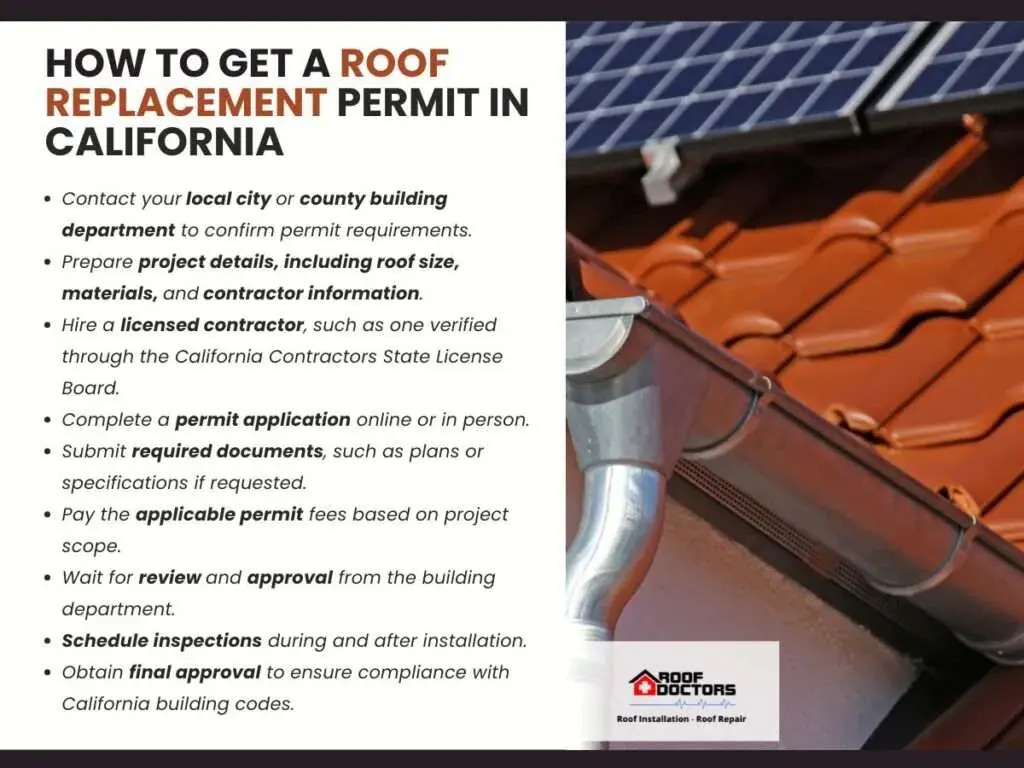
Step 1: Contact Your Local Building Department
Visit your city or county website or office to review requirements and fee schedules.
Step 2: Submit an Application
You’ll need to provide:
- Property address and details
- Scope of work
- Roofing materials being used
- Contractor information (if applicable)
Some cities allow online submissions, while others require in-person applications.
Step 3: Pay the Permit Fee
Fees are typically paid upfront and may vary based on your project’s valuation.
Step 4: Schedule Inspections
Roof inspections ensure the work meets code requirements. These may occur:
- After tear-off
- During installation
- At project completion
How Long Does It Take to Get Approved?
Permit timelines can vary depending on the complexity of your project and the workload of your local building department.
Typical Timelines:
- Simple roof replacements: Same-day approval or within a few days
- Moderate projects: 3–7 business days
- Complex projects: 1–2 weeks or longer
Working with an experienced contractor can help speed up approvals and avoid delays caused by incomplete applications.
Are Permit Costs Included in Roofing Estimates?
This depends on the contractor.
Included vs. Separate Costs:
- Some contractors include permit fees in their total quote
- Others list permits as a separate line item
What to Ask:
- Is the permit included in this estimate?
- Who is responsible for obtaining it?
- Are inspection fees included?
Clarifying this upfront helps you avoid unexpected charges.
Can You Reduce Roofing Permit Costs?
Permit fees themselves are set by local governments, so they’re generally non-negotiable. However, you can still avoid unnecessary costs by:
- Hiring an experienced contractor who submits accurate applications
- Avoiding project delays or corrections
- Planning your project efficiently to reduce repeat inspections
The key is not cutting corners—but avoiding mistakes that can add extra fees.
Why Roofing Permits Are Worth It
While permit fees may seem like an added expense, they’re actually a small investment that helps protect your home and avoid costly problems down the line.
A roofing permit ensures:
- Your roof meets safety and structural standards, reducing the risk of future issues
- Work is properly inspected and verified, giving you confidence in the quality of installation
- Your home stays compliant with local building codes, preventing legal or resale complications
- Your property value is protected, especially when it comes time to sell
Skipping a permit might save you money upfront but it can lead to fines, failed inspections, insurance issues, or expensive repairs later. In the long run, getting the proper permit is always the smarter and safer choice.
Final Thoughts
So, how much is a permit for roof replacement in California? Most homeowners can expect to pay anywhere from $150 to $1,000 or more, depending on factors like location, roof size, materials, and overall project complexity.
While it may seem like just another line item, a permit plays a critical role in ensuring your roof is installed safely, meets local building codes, and protects your home’s long-term value.
The simplest way to navigate the permit process is to work with a professional roofing contractor who handles everything for you. A reputable team will take care of the application, coordinate inspections, ensure full compliance with California regulations, and keep your project running smoothly from start to finish. That way, you can focus on your home with confidence knowing every detail is being handled the right way.
Craig Young is the CEO of Roof Doctors and brings a background in finance, construction, and real estate to the company. He holds undergraduate degrees in International Business and Accounting and a Master's Degree in Finance. Craig is a licensed roofing contractor in California (CSLB #896271), Nevada (License #0095416), Arizona, and Florida (DBPR #CCC1333287), a HAAG Certified Roofing Inspector, and a California Licensed Real Estate Broker. He leads an EPA Lead-Safe Certified Firm and is a GAF Certified Plus Residential Roofing Contractor. He works in Xactimate and Cotality, the estimating platforms used for property assessment and insurance claim documentation. His experience spans construction, real estate, ranching, logging, land development, project management, and business operations.
Related articles

Should I Stay Home During Roof Replacement? What Homeowners Need to Know
No, you don’t have to stay home during a roof replacement and in many cases, it’s actually more comfortable to leave while the work is being done. A roof replacement is one of the most important…

How to Get Insurance to Cover Roof Replacement
Getting insurance to cover a roof replacement requires showing the damage was caused by a covered event, documenting it promptly, and following the claims process with clear evidence and professional…

Comparing Different Roof Underlayment Types
Roof underlayment is a crucial component of roofing systems, acting as a protective barrier between the roof deck and the shingles. It helps prevent moisture infiltration and enhances the roof’s…
Ready for a roof inspection?
Schedule a roof inspection and a roofing specialist will assess your roof, document its condition, and provide a clear written estimate. No advance deposit.