
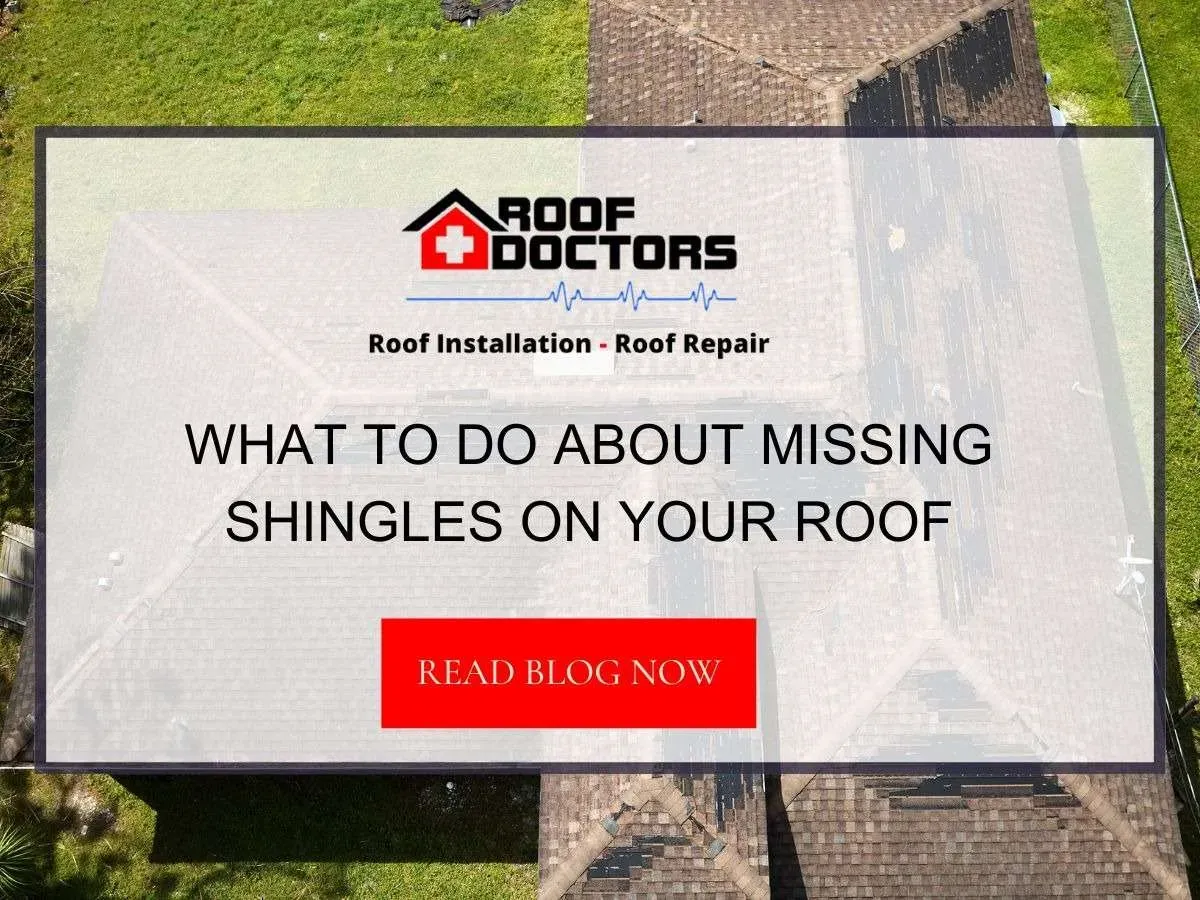
What to Do About Missing Shingles on Your Roof
 Craig YoungCEO9 min read
When you spot missing shingles on your roof, don’t wait. Even a few missing shingles can lead to roof leaks, attic mold, and costly structural repairs if ignored too long. The good news is, not all shingle loss means you need a full roof replacement. Some problems are isolated and fixable; others may be a sign of bigger trouble.
This guide covers exactly what to do if your shingles come loose, including inspection tips, repair options, signs of deeper issues, and how to protect your roof for the long haul. Whether you’re in a storm-prone area or just dealing with wear and tear, acting quickly can save time, money, and headaches.
Why Shingles Go Missing (and What It Means)
Missing shingles don’t just happen at random. Usually, they’re the result of one or more common roofing stressors that can be identified and in many cases, prevented. Recognizing these causes helps you understand the severity of the issue and what to look out for next time.
Most shingles fall off due to high winds, poor installation, aging materials, or attic ventilation issues.
Here’s how each factor plays a role:
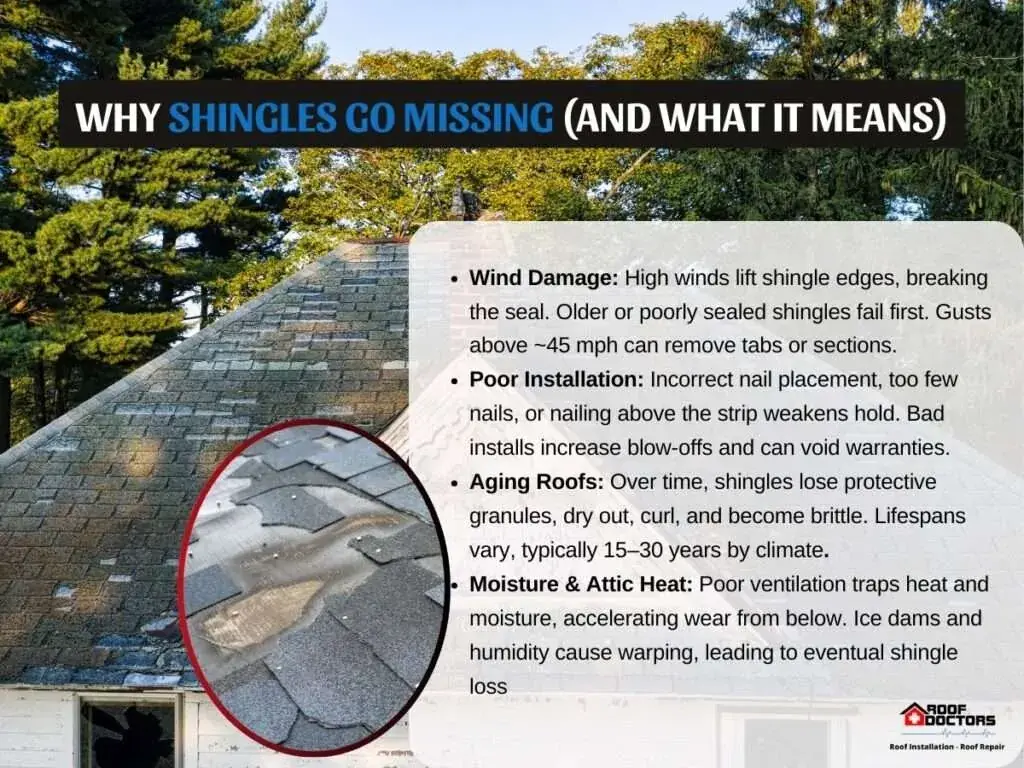
Wind Damage
Strong winds can lift shingles, especially older ones or those not properly sealed. Once wind gets underneath, it can break the bond and pull entire tabs free. Gusts over 45 mph are often enough to do damage, and storms with sustained winds can remove entire sections.
Poor Installation
Nail placement, spacing, and even the angle at which shingles are nailed matter. If shingles are secured too high (above the nailing strip) or with too few nails, they’re more likely to blow off. Improper installation can void your roof warranty and lead to widespread failure.
Aging Roofs
As asphalt shingles age, they dry out and lose their granules, the sand-like material that protects against UV rays. Without this, shingles become brittle and start curling at the edges, making them easy to tear off. Most standard shingles last 15 to 30 years depending on your climate.
Moisture and Attic Heat
When your attic doesn’t vent properly, heat builds up underneath the roof deck. This accelerates aging from below. Add in winter ice dams or springtime moisture, and you’ve got a recipe for warped shingles and eventual blow-offs.
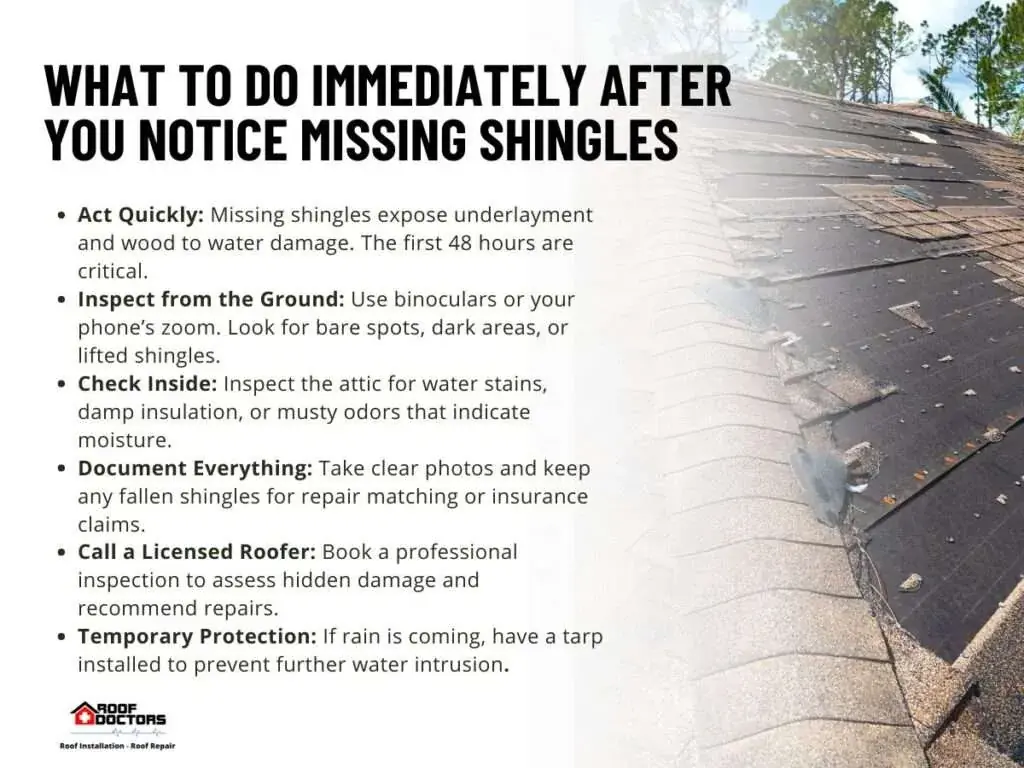
What to Do Immediately After You Notice Missing Shingles
The first few days after shingles go missing are crucial. Water can enter through the exposed underlayment and seep into the wood below, especially if more storms are coming. A quick response helps you minimize long-term damage.
Your goal in the first 48 hours is to assess, protect, and get professional input without risking injury.
Step-by-Step Action Plan:
- Visually Inspect from the Ground: Walk around your home with binoculars or use your phone’s zoom camera. Look for dark patches, lifted shingles, or spots where underlayment is showing.
- Check for Interior Leaks: Visit your attic and look for signs of water: dark stains, wet insulation, or the smell of mildew. Even if you don’t see visible leaks, moisture buildup may still be present.
- Document the Damage: Take wide and close-up photos. Save any shingles you find on the ground. These may help your roofer match replacements or aid in an insurance claim.
- Call a Licensed Roofer: Schedule an inspection right away. A roofer can safely check for hidden damage and determine whether a spot repair or larger fix is needed.
- Cover the Area if Rain Is Imminent: If bad weather is coming and repairs can’t be made immediately, a contractor may apply a temporary tarp over the affected area.
Is Repair Enough or Is Replacement Needed?
Not every case of missing shingles means you need a new roof. In many cases, spot repairs are perfectly acceptable but there are limits. If your roof has reached a certain age or damage is widespread, patching may be a short-term fix for a long-term problem.
If more than 25–30 percent of your roof is missing shingles, full replacement becomes the more practical solution.
Use This Table to Compare Your Situation:
| Condition | Recommended Action |
| One or two shingles blown off | Spot repair is fine |
| Small cluster of missing shingles | Sectional repair possible |
| Repeated repairs on the same section | Reassess for full replace |
| Roof over 20 years old with curling tabs | Consider full replacement |
| Leaks, sagging, or structural deck issues | Full replacement needed |
In borderline cases, a reputable roofer will walk you through both options. They’ll also discuss the health of your roof deck, flashing, and ventilation system critical components that affect your roof’s performance over time.
Can You Replace Missing Shingles Yourself?
For those handy with tools, a few missing shingles may seem like a quick weekend fix. But the risks often outweigh the reward. Roofing work involves ladders, heights, and technical knowledge that most homeowners don’t have.
DIY repairs can void your roof’s warranty, and improper sealing leads to hidden leaks that cost more down the line.
Pros of Hiring a Professional:
- Proper Tools and Safety Gear: Roofers use safety harnesses, ladder stabilizers, and specific tools to ensure both protection and quality.
- Material Matching: Roofers can source the right shingle type, size, and color especially for older or discontinued models.
- Trained Eye for Hidden Damage: What looks like a few missing shingles might mask deeper problems, like lifted flashing or waterlogged underlayment.
- Warranty Protection: Many professional repairs come with warranties and help preserve your original roof guarantee.
Unless you’re replacing a single tab and know exactly what you’re doing, it’s best to leave the ladder in the garage and call a pro.
Preventing Shingles from Coming Off Again
Once your roof is repaired, the next step is making sure it doesn’t happen again. That means improving your roof’s ability to resist wind, manage heat, and shed water especially if you live in a region prone to storms or wild temperature swings.
The best defense against missing shingles is a combination of proper ventilation, maintenance, and quality materials.
Long-Term Protection Tips:
- Improve Attic Ventilation: Stagnant attic heat can bake your shingles from below, reducing their lifespan. Install ridge vents, soffit vents, or powered fans if needed.
- Schedule Seasonal Inspections: A quick check in spring and fall can catch lifted shingles, clogged valleys, or exposed flashing before they cause real damage.
- Trim Overhanging Branches: Nearby trees can scrape shingles, deposit debris, or drop branches during storms. Keep trees trimmed at least 5 feet from the roof.
- Upgrade to Wind-Rated Shingles: Some shingles are rated for 110 to 130 mph wind resistance. These are ideal for hurricane zones, plains states, and anywhere with strong wind events.
- Keep Gutters Clean: Water overflow can back up under the edges of your shingles, especially during spring rains or fall leaf buildup.
Insurance and Missing Shingles: Are You Covered?
If your shingles blew off in a storm or due to high wind, there’s a good chance your homeowners insurance will cover the repair or even replacement. But the cause matters and so does timing.
Most policies cover sudden damage (like wind or hail), but not routine aging or wear and tear.
What to Know About Filing a Claim:
- Review Your Policy: Check the roof coverage section to see if wind, hail, or storm damage is included. Know your deductible and whether depreciation applies.
- File Promptly: You typically have 6 to 12 months to report storm-related damage, depending on your insurer.
- Get an Independent Roofer’s Inspection: Before meeting with an adjuster, have a contractor inspect and document the damage. They can advocate for the full scope of needed repairs.
- Watch for Partial Coverage: Insurers may only pay for the damaged area. But if shingle matching isn’t possible or structural repairs are needed, you may qualify for a full replacement.
- Document Everything: Keep your inspection report, repair quotes, photos, and all communications with your insurance provider.
If your claim is denied or underpaid, consider requesting a second inspection or speaking with a public adjuster.
Comparing Roofing Materials for Better Wind Resistance
If you’re considering a new roof or want to prevent future shingle loss, choosing the right material matters. Some roofing options hold up better in high winds, resist aging longer, and perform better in harsh weather conditions.
Architectural asphalt shingles and metal roofing offer some of the best wind resistance on the market.
Comparison of Common Roofing Materials:
| Roofing Material | Wind Resistance | Lifespan | Pros |
| 3-Tab Asphalt Shingles | Low (60–70 mph) | 15–20 years | Cheapest, easy to install |
| Architectural Shingles | High (110–130 mph) | 25–40 years | Durable, attractive, great wind rating |
| Metal Roofing | Very High | 40–70 years | Energy efficient, fire and wind resistant |
| Clay/Concrete Tile | Moderate to High | 50+ years | Long-lasting, great for dry climates |
| Synthetic Shingles | High | 30–50 years | Designed for extreme weather durability |
Ask your roofer which options are best for your region. In coastal or tornado-prone areas, many homeowners find peace of mind in upgrading to a more secure system.
When to Stop Repairing and Start Replacing
If you’ve patched your roof several times over the past few years or if shingle blow-off is happening repeatedly it’s time to ask the bigger question.
A roof that constantly needs repairs isn’t reliable or cost-effective. At some point, full replacement becomes the smarter choice.
Look for these signs it’s time to move on:
- Your roof is more than 20 years old
- Multiple repairs in the same areas
- Sagging roof deck or water-stained ceilings
- Poor attic ventilation causing early aging
- Increasing energy bills due to heat loss
Choosing the right time for a replacement gives you control over the cost, schedule, and materials rather than being forced into an emergency during storm season.
Repairing Missing Shingles on Roof: What’s Next?
When you notice missing shingles on your roof, swift action is your best protection. Whether it’s calling in a roofer, documenting damage, or filing an insurance claim, every step helps keep the problem from growing. And if you’ve faced repeated shingle issues, it may be time to start planning your roof replacement.
Understanding what causes shingles to fail and how to strengthen your roof for the future sets you up for long-term savings and peace of mind.
Craig Young is the CEO of Roof Doctors and brings a background in finance, construction, and real estate to the company. He holds undergraduate degrees in International Business and Accounting and a Master's Degree in Finance. Craig is a licensed roofing contractor in California (CSLB #896271), Nevada (License #0095416), Arizona, and Florida (DBPR #CCC1333287), a HAAG Certified Roofing Inspector, and a California Licensed Real Estate Broker. He leads an EPA Lead-Safe Certified Firm and is a GAF Certified Plus Residential Roofing Contractor. He works in Xactimate and Cotality, the estimating platforms used for property assessment and insurance claim documentation. His experience spans construction, real estate, ranching, logging, land development, project management, and business operations.
Related articles
How to Install Shingles on a Hip Roof Step by Step
Install shingles on a hip roof step by step might seem like a job best left to the pros, but with the right prep and approach, you can tackle it yourself. Hip roofs, with their sloping sides meeting…
Is It Safe to Install Shingles in the Rain?
Timing is everything when working on your roof, especially when installing roof cladding. When it starts to rain during installation, is it okay to push ahead with your roofing project or wait for…
Metal Shingle Roof Cost Breakdown
When you’re looking to invest in a new roof, you might find yourself thinking, “Is it really worth the cost? ” Let’s look at metal shingle roof cost breakdown. Metal shingle roofs are becoming more…
Ready for a roof inspection?
Schedule a roof inspection and a roofing specialist will assess your roof, document its condition, and provide a clear written estimate. No advance deposit.