Key Roof Inspection Points to Consider When Purchasing a Home
 Craig YoungCEO9 min read
What are key roof inspection points to consider when purchasing a home? Embarking on purchasing a home is a momentous occasion filled with excitement and anticipation. However, amidst the thrill of finding the perfect property, it’s crucial to recognize one of the most fundamental aspects: the roof’s condition.
As the first line of defense against nature’s elements, the roof plays a pivotal role in safeguarding your investment and ensuring the comfort and security of your family. Therefore, conducting a comprehensive roof inspection before sealing the deal is paramount.
In this guide, we delve into the essential points to consider when assessing the roof of a prospective home, empowering you to make an informed decision and confidently embark on your homeownership journey.
Essential Roof Inspection Points to Consider When Purchasing a Home
Buying a home is a significant investment, and it is crucial to ensure that every aspect of the property is in good condition. One of a home’s most critical components is its roof, as it protects the structure from weather elements and contributes to its overall integrity.
Conducting a thorough roof inspection before purchasing a home can save you from potential headaches and expenses. Here are key roof inspection points to consider when making your decision:
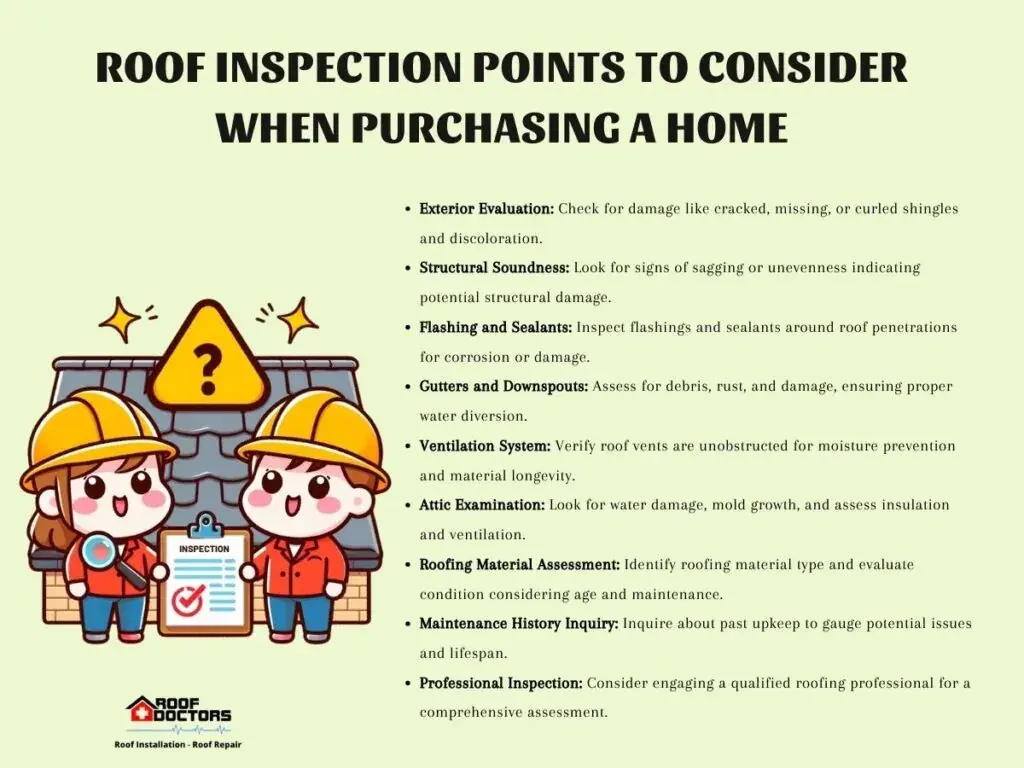
1. Exterior Evaluation
Commence your inspection by scrutinizing the exterior of the roof. Look for visible signs of damage, such as cracked, missing, or curled shingles. Pay close attention to any areas exhibiting discoloration, as they may indicate underlying issues.
2. Structural Soundness
Assess the roof’s structural integrity by checking for signs of sagging or unevenness. These indications suggest structural damage, such as rot or weakened supports, necessitating immediate attention.
3. Flashing and Sealants
Inspect the flashings around chimneys, vents, and other roof penetrations. Ensure they are securely affixed and devoid of corrosion or damage. Additionally, scrutinize the condition of sealants to confirm their efficacy in preventing water intrusion.
4. Gutters and Downspouts
Evaluate the condition of gutters and downspouts for debris buildup, rust, or damage. Clogged or damaged gutters can lead to water pooling on the roof, increasing the risk of leaks. Verify that gutters are firmly attached and that downspouts effectively divert water away from the foundation.
5. Ventilation System
Adequate ventilation is crucial for maintaining a healthy roof environment. Check for the presence of roof vents and ensure they are unobstructed. Proper ventilation helps prevent moisture buildup and extends the lifespan of roofing materials.
6. Attic Examination
If accessible, inspect the attic for signs of water damage, such as staining or mold growth on the underside of the roof decking. Assess insulation levels and ventilation to ensure optimal conditions for the roof and attic space.
7. Roofing Material Assessment
Identify the type of roofing material used and assess its condition accordingly. Different materials, such as asphalt shingles, metal, or tile, have varying lifespans and maintenance requirements. Consider the age and condition of the roofing material when evaluating its longevity.
8. Maintenance History Inquiry
Inquire about the roof’s maintenance history and any repairs or replacements undertaken. A well-maintained roof with documented upkeep is likely to have fewer issues and a longer lifespan.
9. Professional Inspection
While a visual inspection is essential, engaging a qualified roofing professional for a comprehensive assessment is highly recommended. Professional inspectors possess the expertise to identify hidden issues and provide valuable insights into the roof’s condition.
A meticulous roof inspection is paramount when buying a home to ensure the structural integrity and longevity of your investment. By thoroughly examining key inspection points and seeking professional guidance when necessary, you can make an informed decision and enjoy peace of mind knowing your new home’s roof is in excellent condition.
Importance of Inspecting a New Home’s Roof Before Buying
Conducting a thorough inspection of a new home’s roof before buying offers several benefits that can protect your investment and provide peace of mind: Roof Inspection Points to Consider When Purchasing a Home.
Inspecting a new home’s roof may seem unnecessary at first glance, especially since it’s a freshly constructed property. However, several important reasons underscore the importance of conducting a thorough roof inspection even on a new home.
1. Ensures Quality Assurance
Despite being newly constructed, homes can have roofing issues due to errors in installation, materials, or workmanship. Conducting a roof inspection allows you to verify that the roof is constructed according to industry standards, ensuring its quality and durability.
2. Identifies Hidden Defects
A thorough inspection can uncover hidden defects or issues with the roof that may not be immediately apparent. This includes problems such as improperly installed flashing, inadequate ventilation, or structural deficiencies. Identifying these issues early can prevent costly repairs or replacements in the future.
3. Utilizes Warranty Coverage
New homes typically come with warranties that cover defects in materials and workmanship for a specified period. By inspecting the roof before purchasing, you can identify any defects that may be covered under the warranty. This allows you to address issues promptly and take advantage of warranty protection if needed.
4. Negotiates Repairs or Adjusts Pricing
If the inspection reveals any issues with the roof, you can negotiate repairs or adjustments to the purchase price with the seller. This ensures that you are not responsible for covering the cost of repairs or replacements after closing, saving you money and potential headaches.
5. Prevents Future Problems
Addressing any issues with the roof before buying helps prevent future problems such as leaks, water damage, or structural issues. By ensuring that the roof is in good condition, you can minimize the risk of costly repairs or maintenance down the line.
6. Meets Insurance Requirements
Some insurance companies may require a roof inspection before covering a new home. By conducting an inspection before buying, you can ensure that the roof meets the insurance company’s requirements and avoid any delays or complications in obtaining coverage.
7. Provides Peace of Mind
Knowing that the roof of your new home is in good condition provides peace of mind and confidence in your investment. You can move into your new home with the assurance that the roof will protect your property and belongings for years.
Overall, inspecting a new home’s roof before buying is a smart investment that can save you time, money, and stress in the long run. It ensures that you are making a sound investment and protects you from potential roofing issues or liabilities in the future.
Additional Tips for Roof Inspection Before Home Purchase
Here are some additional tips or recommendations to consider when conducting a roof inspection before purchasing a home:
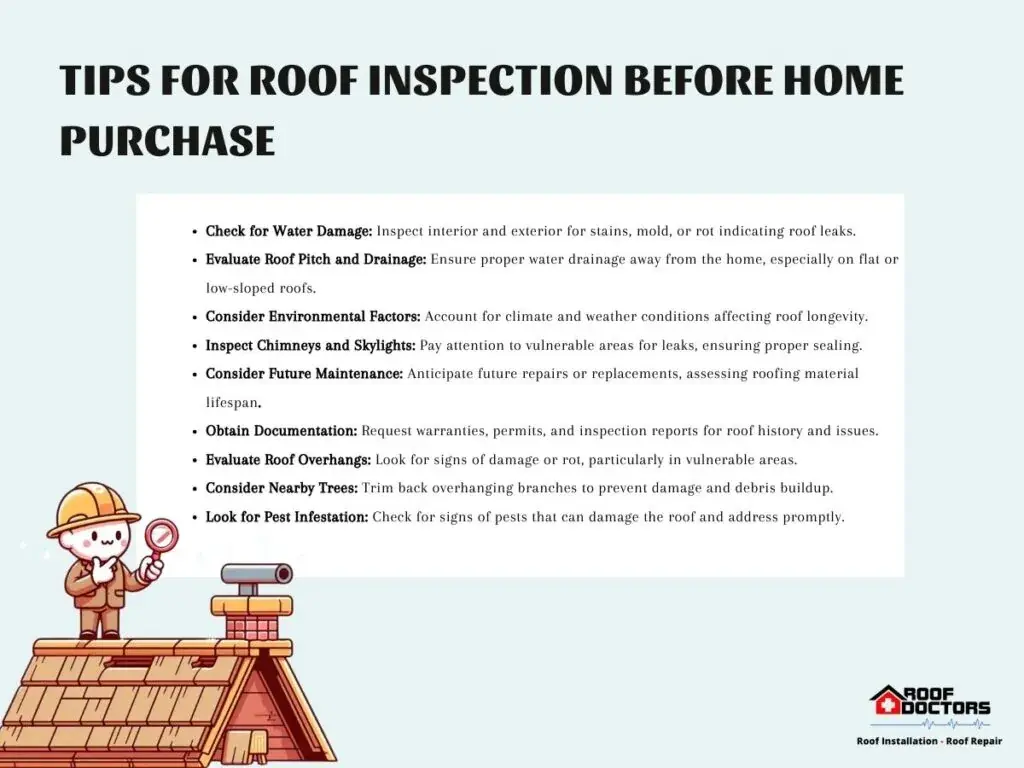
1. Check for Signs of Water Damage
Look for signs of water damage on the home’s interior and exterior. Stains or discoloration on ceilings, walls, or attic spaces can indicate roof leaks. Additionally, inspect the roof for water stains, mold, or rot, which may signify ongoing water infiltration.
2. Evaluate Roof Pitch and Drainage
Assess the roof pitch and drainage system to ensure water is properly directed away from the home. Flat or low-sloped roofs should have adequate drainage systems in place, such as gutters, downspouts, and scuppers, to prevent water pooling and potential leaks.
3. Consider Environmental Factors
Take into account the climate and environmental factors that may affect the roof’s longevity and performance. Homes located in areas prone to severe weather, such as hurricanes, tornadoes, or heavy snowfall, may require additional structural reinforcements or specialized roofing materials.
4. Inspect Chimneys and Skylights
Pay special attention to areas where the roof intersects with chimneys, skylights, and other roof penetrations. These areas are more susceptible to leaks and may require additional flashing or sealant to prevent water intrusion.
5. Consider Future Maintenance Needs
Factor in potential future maintenance needs and costs when evaluating the condition of the roof. Determine the expected lifespan of the roofing materials and any anticipated repairs or replacements that may be necessary during your ownership of the home.
6. Obtain Documentation
Request documentation related to the roof, such as warranties, installation permits, and inspection reports. Reviewing these documents can provide valuable information about the roof’s history, warranty coverage, and any existing issues or repairs.
7. Evaluate Roof Overhangs and Eaves
Inspect the roof overhangs and eaves for signs of damage or deterioration. These areas are susceptible to water damage and rot, especially if they are not properly maintained or protected. Look for sagging, peeling paint, or wood rot that may indicate underlying issues.
8. Consider Nearby Trees and Vegetation
Take note of any trees or vegetation near the home that could pose a threat to the roof. Overhanging branches can cause damage to shingles or create debris buildup in gutters, leading to potential roof issues. Consider trimming back trees or vegetation to minimize the risk of damage to the roof.
9. Look for Signs of Pest Infestation
Inspect the roof for signs of pest infestation, such as nests, droppings, or chewed materials. Pests such as rodents, birds, or insects can cause damage to the roof and compromise its integrity. Address any pest issues promptly to prevent further damage.
By incorporating these additional tips into your roof inspection process, you can ensure a more thorough assessment of the roof’s condition and potential issues. This comprehensive approach will help you make a more informed decision when purchasing a home and avoid costly surprises down the road.
Conclusion
Undertaking a thorough roof inspection before a home purchase is an indispensable aspect of the home-buying process. Key Roof Inspection Points to Consider When Purchasing a Home, the roof is a pivotal shield against environmental elements, preserving the property’s integrity. Potential buyers can uncover potential issues and make well-informed decisions by scrutinizing critical inspection points like exterior condition, structural robustness, flashings, gutters, ventilation, and environmental considerations.
Moreover, enlisting the expertise of certified roofing inspectors can yield invaluable insights, ensuring a comprehensive evaluation of the roof’s condition. Addressing any identified concerns, negotiating repair arrangements with the seller, and planning for future maintenance are vital steps in safeguarding your investment and circumventing expensive repairs or replacements.
Ultimately, dedicating time and attention to a thorough roof inspection offers reassurance, instills confidence in your investment, and guarantees lasting protection for your home. By prioritizing the health and resilience of the roof, buyers can embark on their homeownership journey with assurance and confidence in their informed and prudent decision-making.
Craig Young is the CEO of Roof Doctors and brings a background in finance, construction, and real estate to the company. He holds undergraduate degrees in International Business and Accounting and a Master's Degree in Finance. Craig is a licensed roofing contractor in California (CSLB #896271), Nevada (License #0095416), Arizona, and Florida (DBPR #CCC1333287), a HAAG Certified Roofing Inspector, and a California Licensed Real Estate Broker. He leads an EPA Lead-Safe Certified Firm and is a GAF Certified Plus Residential Roofing Contractor. He works in Xactimate and Cotality, the estimating platforms used for property assessment and insurance claim documentation. His experience spans construction, real estate, ranching, logging, land development, project management, and business operations.
Related articles
How Much Does a Roof Inspection Cost?
Regular roof inspections are essential for maintaining the health of your home’s roof and preventing costly repairs. On average, a roof inspection typically costs between $100 and $400, but this…
Roof Inspection Cost: Is It Worth It
The roof stands between you and everything nature throws your way. And yet, it’s easy to overlook it until something goes wrong. Regular roof inspections might feel like an extra expense, but in the…
Roof Certification vs Roof Inspection: Key Differences Explained
Roof Certification vs Roof Inspection: When it comes to maintaining the safety and integrity of your home’s roof, there are a few key services that you may be considering. Two of the most common…
Ready for a roof inspection?
Schedule a roof inspection and a roofing specialist will assess your roof, document its condition, and provide a clear written estimate. No advance deposit.